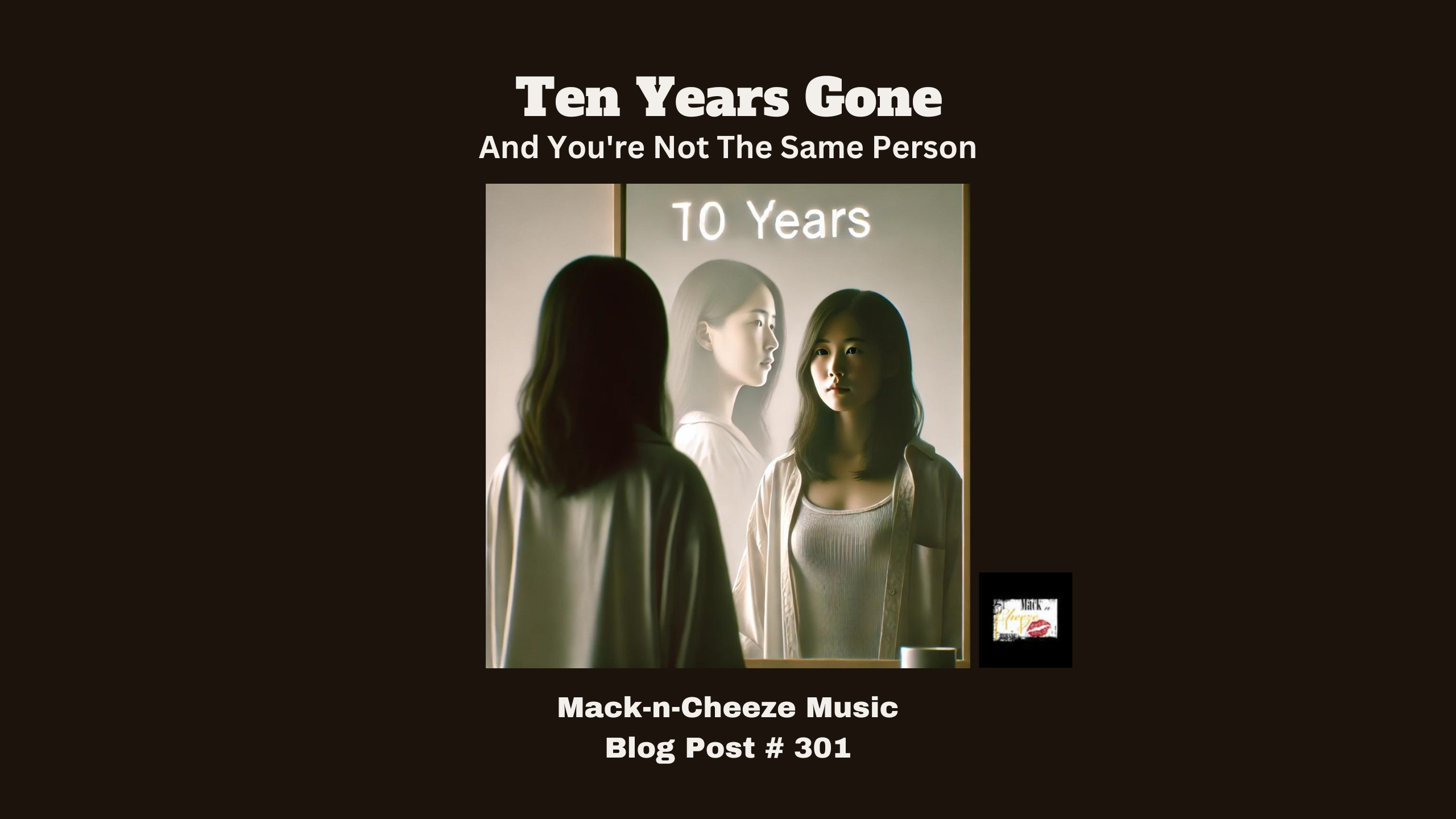
Ten years gone, and you’re not the same person you once were. Ever wonder where you’ll be a decade from now? It’s easy to picture a future version of ourselves that feels fixed, like a reflection frozen in time. But the truth is, we often underestimate how much we’ll change in those ten years. Psychological research has a name for this mental glitch: the “end of history” illusion. It’s the idea that we believe we’ve reached our final form, but ten years gone, you’ll find that your tastes, values, and even personality have evolved in ways you never imagined.
Estimated reading time: 12 minutes

Table Of Contents
The End-Of-History Illusion
How You Think You’ll Stay the Same, But Won’t

People tend to think they’ve already grown into who they will be, but the truth is far different. This is the end-of-history illusion at work.
The Illusion: We’ve undergone transformative personal growth until now, but we won’t change in the future.
Yet, despite this, our tastes, values, and even personalities keep evolving.
Psychologist Daniel Gilbert explored this in his research. A 20-year-old looks back at their teenage years and sees how much they’ve grown. But when asked how much they’ll change in the next ten years, they underestimate it. By age 30, they’ll recognize how much they’ve transformed but still believe they won’t change much more. The pattern repeats at every stage of life-whether you’re 20 or 60.
It’s a blind spot, and whether you’re a teenager or middle-aged doesn’t matter. The illusion convinces us that our current selves are the finished product. We see our past as immature, but we struggle to imagine future changes in our development. Gilbert suggests it’s hard for us to predict personal growth or change. We are content with where we are in the present moment.
Gilbert also points out that this illusion links to how we experience time. We see change in hindsight but struggle to envision how we’ll change. That gap in perception is where the end-of-history illusion takes hold. We convince ourselves that who we are now is who we’ll always be.
How The Illusion Affects Life Perception
Have you thought about who you are going to be in ten years? Appreciate that the groundwork you are laying down today is building who you will be in ten years.
Blind Spots In Personal Growth
People look back and see their younger selves as foolish. They see mistakes and bad decisions and think they’ve grown since then.
But they don’t see much change when they think of the future. They believe they’re done growing. This is the end-of-history illusion. They think who they are now is who they’ll always be.
It’s hard to imagine being different. The person they are today feels permanent. But in ten years, they’ll see they’ve changed again.
This stops them from pushing themselves. They think growth is over when, in reality, it’s never done.
Are We The Finished Product?

Life has stages-childhood, youth, and adulthood. As we age, big changes slow down. The present feels fresh and final. It’s easier to think we’ve figured it all out, and it feels safe. But admitting we’ll change disrupts that.
We like thinking we’re finished. It seems simple. But we keep changing. Life moves, and so do we.
Time and change don’t follow a straight line. We expect life to move in steps, but it never does. Change comes in bursts—fast or slow. Years can pass with nothing, then everything shifts in a moment.
The Top Five Regrets Of The Dying
Bronnie Ware’s book, “The Top Regrets Of The Dying,” is based on her experience as a palliative care nurse. Palliative care nurses are specialists who typically care for the chronically or terminally ill. I didn’t know the term. Ware’s book goes deep into what matters most to people in the final stages of their lives.
Not Living a Life True to Oneself
This is the most prevalent regret from what little I know about life. Many folks have bottled up their passions and desires. As a parent, it’s understandable. You want only the best for your kids. Children and family are the first priority-always. Often, the first priority becomes the only priority.
Many live only for their careers. You know them. They work themselves literally to death. Retirement comes and the purpose of their lives end.
For many, aspirations and dreams were put on hold till it was too late to mount the pursuit. They did not seek a life that aligned with their true selves.
Working Too Hard
Jack Torrance said, “All work and no play makes Jack a dull boy.”
Working too hard is especially prevalent in men. The excess time spent on career obligations leaves little time for family and themselves. Success on the job shouldn’t eclipse the contentment of personal connections or experiences.
Not Expressing Feelings
You and I know people who hide their emotions.
We learn young to keep our feelings inside. It’s a way to fit in and protect ourselves from judgment and conflict. Fear makes us do it.
Hiding becomes a habit. Even when it hurts us, we keep doing it. Regret comes later. It comes from not living true and not telling the people we love how much they mean. In the end, the loss of that closeness stays with them.
Losing Touch with Friends
Most people do not want to die lonely. We are faced with the busyness of life and the priorities we adhere to. In that comes the neglect of not maintaining important friendships.
Maintaining these relationships is often part of our identities. Focusing only on ourselves is part of our egocentric nature. Too late, many of us realize that we have put aside meaningful connections.
Not Allowing Oneself to Be Happier
In the end, people regret not choosing happiness. They lived for others, stayed safe, and missed out. They wish they had taken risks, followed their desires, and enjoyed life more. Fear held them back, and now they see what it cost.
They also regret what they didn’t say or do. Fear of failure and pain kept them from joy. With little time left, they see happiness was always available, but they never reached for it. That’s what haunts them most.
The Illusion in Action: Your Next Ten Years

Humans see time differently when looking back than when looking forward. In hindsight, change is apparent. We know how much we’ve grown, what we’ve learned, and how we’ve changed. We can point to the moments that shaped us. It feels real because we’ve lived it.
But when we look ahead, it’s different. The future feels uncertain. We think who we are now is who we’ll always be. It’s hard to picture more growth. We assume the consequential changes are behind us.
This happens because the present feels solid, while the future is unknown. New experiences and challenges wait, but we can’t see them. We think life’s big growth stops in adulthood, but it doesn’t. Looking back, we see the change. Looking forward, we don’t. But the next ten years will change us, just like the last ten did.
Back To Gilbert
Daniel Gilbert’s theory of the end-of-history illusion shows we believe our growth is behind us. We think who we are now is who we’ll be in the future. But this isn’t true.
We struggle to see how new events will change us. Our minds focus on the present self. It feels solid, complete. We can’tpicture how experiences, challenges, and people will shape us later. This creates a blind spot. We underestimate how much life still has to teach us.
Gilbert says we can’t imagine the unknown. We forget that just as the past changed us, the future will too. The present feels fixed, but life moves on. It throws things at us we don’t expect, and we change again. This gap between what we see in the past and what we can’t predict in the future is the heart of the illusion.
Will This Really Matter?
Underestimating change limits creativity. We think who we are now is who we’ll always be. We make choices based on today’s vision and style, not considering how they will evolve. This can trap us.
An artist might commit to one style, unaware they’ll outgrow it. A writer or musician may focus on themes that no longer fit them in a few years. This disconnect brings frustration. It holds back growth and limits new ideas.
When we don’t expect change, we box ourselves in. We stick to what we know and avoid trying new things. But creativity grows with change. As we evolve, so do our ideas. If we fail to see this, we get stuck. Freedom comes from accepting change. It gives us space to adapt, try new things, and reinvent ourselves as we grow.
The Next Ten Years: If You Haven’t, Get Started
This is typical for many of us: Each day, we face endless demands. The moment we wake up, the world begins to pull. There are jobs, family, and relationship commitments, and then all the obligations that pile up.
You move through the hours like a machine, accomplishing task after task. The call of all those expectations is awaiting an answer. On the surface, there is the illusion of having it all together. But beneath, a growing emptiness and a quiet voice asks, “Is this all there is?”
Do you remember what you once wanted for yourself? Your ambitions and dreams were vivid. It’s as if those hopes and aspirations lie in a grave. Time and responsibility take their toll.

From the world, you have learned that success is achieved through productivity and efficiency. On top of that, you have to keep keeping up with everyone else. But no matter how hard you try, it seems like it’s never enough. Expectations are always coming, and you keep giving. The social fabric thrives on your effort, your time, and your attention.
In the last days of your life, will you ask yourself, “What was my life all about?”
Are you going to take action now and rekindle your purpose and passion?
It starts by stepping away from it all, if only briefly.
Is there is a peaceful corner in your house? If not, what if you sit quietly in your car? You can take a walk down the street or go to the park. When you do this, it may have been a long time since you have looked into yourself. The world fades, and for a moment, you are you. You’re not a worker, a friend, a family member, or someone fulfilling obligations. You are nothing more or less, only you.
It might seem strange at first, or not. Life will go on. Calls and emails pile up, people expect answers, and the clock keeps ticking.
But in that small space, you have felt something away from everything. It is stillness. The worries of the day fade. The constant chatter in your mind quiets. And even though nothing seems to be happening, something important is.
Start returning to this place. Call it what you want-sanctuary, temple, joy, bliss, whatever. Trust me, it will become your refuge from the demands of the world.
It will begin as a quiet time, a chance to breathe. The ideas will come; you need to open yourself to the process. Thoughts buried by the busyness rise above the surface. You feel sparks of creativity. Your old dreams or half-formed ideas resurrect themselves. This is only the beginning, where your soul can finally speak.
It feels like most people don’t get it. Friends might ask why you’re distant as you go on this journey. You disconnect from the latest trends, the news, or the gossip. The world doesn’t see the value in this quiet space you’ve created. But something inside you knows the truth: this is where your genuine self lives.
Society tells you to keep going, do more, and be more. But here, this is your temple, a sacred space. The world wants you to conform. The profound realization is that the more you chase after the world’s approval, the further you drift from who you are. In your quiet moment, you aren’t doing something for anyone else. You aren’t performing and achieving for them. You are you, and this is where you thrive.
Your creativity returns, your dreams resurface. You will begin to remember who you are beyond the roles you play. It’s not immediate; it’s not always clear. But over time, this space becomes your refuge-a place where you can experiment, explore, and be you.
The world can keep taking from you but never touch this sacred space. It is here, in your sanctuary, that you find not only peace but also yourself.
Can We Help You?
Is there one thing we can do for you? It’s our purpose. That’s why we’re here.

Thank you for reading. It means a lot that you spent your time here. We hope this gave you something to think about or helped somehow.
We would love to hear what you think. Share your thoughts in the comments. Tell us what stood out or what you connected with. Your perspective matters, and we look forward to hearing it.
If this blog resonates with you, pass it on.
If you want more, subscribe. You’ll stay up to date and never miss what’s next. We would be glad to have you along for the ride.
Again, thank you for reading this.
Want More Mack-n-Cheeze?
Videos - Bryan At Mackncheeze on YouTube
Podcasts – Bryan At Mackncheeze Apple Podcasts, Fountain, Spotify
Leave a Reply