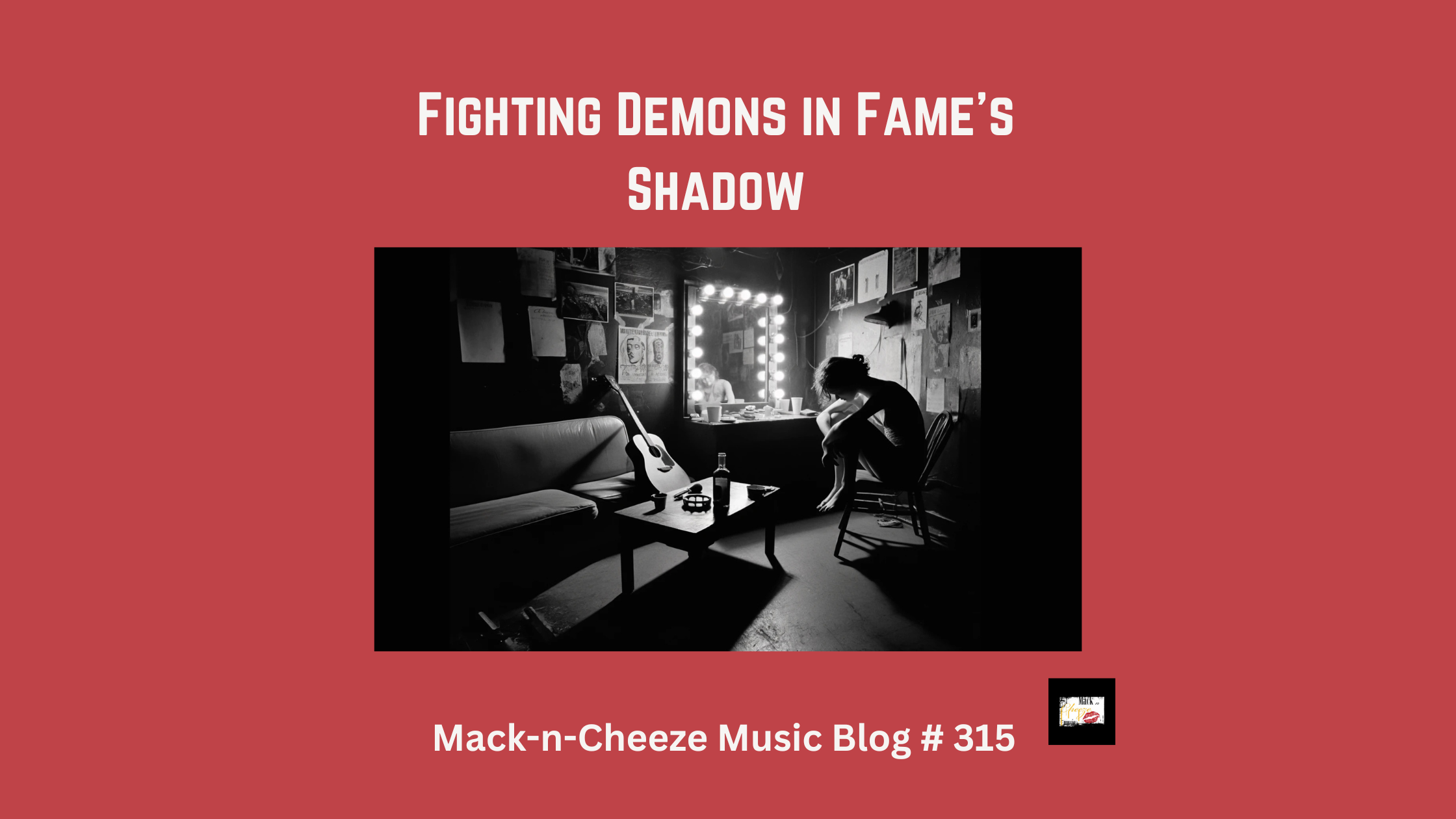
Fame has a way of magnifying everything, success, pain, and the struggle to stay whole. For Hank Williams, Amy Winehouse, and Kurt Cobain, their stories are not just tales of talent but of battles fought in the shadows of their own brilliance.
Estimated reading time: 11 minutes

Image generated by naif X
Table Of Contents
When Fame Is Both A Gift And A Curse
Have you ever seen the malaise of fame that seems so prevalent in celebrities’ lives and shaken your head in disbelief? You wonder how, after all this person has been given, they are in circumstances of tragedy and addiction. I look on in disbelief myself.
Is it that fame lifts you up and tears you down? We have all fantasized about what being famous would be like. Does fame shine bright on the best of you but leave no shadow for your struggles to hide?
The stage that celebrates you appears to be the battlefield where you fight your hardest battles. Some people lose.
The work never stops. There’s always another show, another song, another crowd. The days bleed together. Mornings come too soon. Nights never feel long enough. Rest is a stranger. What was once joy turns into duty. The art that brought the light becomes heavy, dragging the soul that created it.
People surround you, but the room feels empty. Smiles fade when the cameras turn off. The cheers echo, but they don’t reach the heart. Fans love the idea of you, not the real you. The ones closest to you struggle to find their way in. The walls fame builds are tall, and loneliness grows in the spaces behind them.
Can You Grapple With This? Could I Cope With The Pressure?
The world sees your face on every screen and follows your every move. There is no escape from the public’s gaze. Life loses its grounding. The things that make most people feel alive, quiet moments and simple pleasures, slip away. Fame isolates even as it surrounds.
You have to keep going. No one asks if you’re tired. No one cares if you’re breaking inside. The show must go on. The crowd expects perfection. The industry expects more. The weight grows heavier. You push through the pain. You hide the cracks. But every performance takes a little more from you, and nothing gives it back.
Joy fades, the body weakens, and the mind fractures. Fame demands everything, and what does it give back in return?
Kurt Cobain

Those who seek meaning in Kurt Cobain’s pain have picked apart his life and music. His story is a caution, a portrait of fame’s dark edge. Cobain’s journals reveal a man wrestling with despair.
The divorce of his parents scarred Curt Kobain, leaving behind the self-image that shaped him. Rejection became a shadow he could never shake. The boy who felt abandoned grew into a man who wrestled with instability.
He lived with constant pain, a stomach condition that gnawed at him. Heroin dulled it but brought its own chains. His body fought a war, and his mind couldn’t keep up. The two battles fed each other, leaving him in tatters.
Kurt Cobain wrestled with the weight of fame. He craved authenticity but found himself trapped in a world that demanded conformity. His mental health battles and chronic physical pain only deepened the disconnect.
Cobain’s lyrics speak of loneliness and a hollow ache, raw and stripped of pretense. Something in the Way and Pennyroyal Tea feel like confessions whispered into the void, unfiltered and haunting.
In the end, his music bore the weight of his struggles. It was his way of saying what words could not, a cry for connection in a world that never seemed to listen.
I have a friend who loves Kurt Cobain as the second coming. My pal has burnt a lot of bridges in his life. He suffers the loss of his parents and yet has an endless cash flow, or so it seems. The alcohol abuse is severe. I’m starting to understand more why he idolizes Kurt. My friend sees himself as he sees his hero.
The Fleeting Nature Of Fame’s Glory
Fame and success often appear as the ultimate achievements, but they bring a unique set of societal pressures and cultural expectations. For those in the public eye, these forces are magnified to an extraordinary degree, turning everyday struggles into spectacles and demanding an almost inhuman level of perfection.
Fame turns you into an idol; success is a gift and a trap. It requires perfection. You must look right, act right, and be what they expect. A missed note, a wrong word, a crack in the facade, and the haters will pounce. The applause fades into judgment, and your personal life disappears. You become a symbol, an idea, and the world forgets you are a human being.
Privacy vanishes. A simple walk turns into a headline, and a quiet dinner becomes a story. Every gesture is captured, every word dissected. You are always on display; life is not your own. The crowd demands to see you, hear you, know you. There is no escape from their eyes.
Fame loves a good fall. Struggles become entertainment. Addiction, heartbreak, and despair are turned into stories for clicks and laughs. The world watches your pain and calls it drama. There is no room for weakness, no space for healing. You carry it alone while the crowd cheers or jeers.
Fame is fleeting. The world moves fast. The audience wants the next big thing, the next bright star. You must keep going, be more creative, remain fresh, and reinvent yourself. There is no time to pause, no time to rest.
Fame promises everything but takes more. It asks for your soul, your privacy, your peace. It turns life into a performance and pain into a product. For those who rise, the fall is always waiting.
Black To Black: Amy Winehouse

Amy Winehouse’s life was music, woven into her from the start. Born on September 14, 1983, in Southgate, London, she grew up in a family steeped in jazz. Many of her uncles were professional jazz musicians. Her father, Mitch, often sang Frank Sinatra songs to her, filling their home with music.
This early immersion in music shaped her path. By her teens, Winehouse’s unique voice drew attention, landing her a spot with the National Youth Jazz Orchestra. In 2002, she signed with Simon Fuller’s 19 Management and began recording songs. Soon after, she secured a publishing deal with EMI and formed a working relationship with producer Salaam Remi. These collaborations led to her debut album, Frank (2003), a record infused with jazz influences and co-written by Winehouse, apart from two covers. The album was a critical and commercial success in the UK, earning a Mercury Prize nomination and the Ivor Novello Award for her song “Stronger Than Me.”
Her rise was swift, almost too fast for her to catch her breath. The industry demanded more. By 2006, her second album, Back to Black, catapulted her to global fame. Songs like “Rehab” and “You Know I’m No Good” showcased her raw talent and lyrical defiance. Winehouse became a cultural icon, her voice genuine, her lyrics hauntingly true to life.
The Study
Her lyrics reflected her reality. Scholars from the International Journal of Language and Literary Studies researched her songs. They studied Winehouse’s words and found the colors blue and green as metaphors for grief and longing. Her lyrics showed heartbreak, addiction, and loneliness.
Amy Winehouse died on July 23, 2011, at just 27 years old. Her death revealed the high cost of fame and the fragility of those who give so much of themselves to their art. Yet, her voice continues to inspire, her songs echoing with the truth of her life, a brilliant but fragile artist whose story warns us to protect the humanity behind the music.
Fame On The Move: The Chaos Of Life On Tour
Add to fame and success the life on tour.
Long hours in vans and busses, sometimes only grabbing a quick nap before the next gig. Nights in empty hotel rooms. The schedule never stops. After the show, cheers fade, and the silence grows. The thrill of the stage can turn into loneliness. The shift is sharp, and few can take it.
Touring takes more than it gives. Days blur into airports, dressing rooms, and long roads.
The body breaks down, and minds grow tired. Relationships fall apart under the weight of distance and time. There is no pause, no moment to breathe. The cycle repeats, wearing them down with every turn.
Could You Live The Dream?
The life so many us dream of is far from glamorous.
In this chaos, legitimate relationships are a lifeline. Family, old friends, and trusted partners remind the artist of their identity. They give a place to rest, be vulnerable, and feel human again. But fame breaks even these bonds. Long hours, constant travel, and endless demands push people away. Trust becomes rare. Is the friend real, or are they here for the spotlight?
The isolation grows. Surrounded by people, the artist feels alone. The loneliness is sharp, driving them to fill the void with things that cannot last. Substance abuse, reckless choices, anything to quiet the ache.
Rebuilding these connections can save them. Family, therapy, and authentic friendships anchor the soul. They remind the artist they are more than a face on a screen. They are human, loved, and matter beyond the applause.
Fame blinds the world to this. It turns people into idols, forgetting they are flesh and blood. We can make space for healing if we see the person behind the image and offer kindness instead of judgment. Fame may demand perfection, but humanity does not
Hank Williams

Born on September 17, 1923, in Mount Olive, Alabama, Hank Williams grew up poor, battling health issues and a sense of isolation that never left him. Music became his outlet and escape and by his late teens, his distinctive voice and songwriting talent began to draw attention. With hits like “Your Cheatin’ Heart”, “Cold, Cold Heart”, and “I’m So Lonesome I Could Cry”, Williams redefined country music, weaving raw emotion and simple truths into melodies that resonated across America.
His songs spoke of heartbreak, loneliness, and longing, the feelings he knew intimately. Williams achieved fame at adizzying pace, becoming the first country music superstar. He performed on the Grand Ole Opry, sold millions of records, and became a household name. Yet, his success brought little peace.
Williams drank hard. His back suffered a painful spinal condition that was sharp and constant. His personal life was tumultuous, with his marriage to Audrey Sheppard fraught with infidelity and fights. The connections to those closest to him frayed under the weight of his success.
His songs, so deeply personal, connected with millions. Yet, behind the lyrics, Williams was isolated, drifting further from meaningful relationships and drowning in his vices. He died alone in the backseat of his car on New Year’s Day in 1953 at just 29 years old.
Could You Have Handled The Fame?
Music endures because it speaks to the struggles that unite us all.
Hank, Amy, and Kurt’s songs endure because they are raw, honest, and deeply human. They resonate in the hearts of those who have loved, lost, and fought to make sense of life.
Please reflect on the societal pressures artists face and the importance of fostering empathy and understanding for those in the public eye.
As I wrote this post, I remembered the time I was playing 5 to 6 nights a week and distanced from loved ones.
My bandmates and I were in the same age group as Amy, Kurt, and Hank. We didn’t understand our circumstances as the drama of our time on the road played out. We were young, our choices were questionable, and could have fallen into the same pitfalls. Some of us did.
Had my circumstances reached the pinnacles of success as a twenty-something-year-old, could I have done better? Would I, as well, have fallen?
Fame can amplify talent, but it cannot heal the pain. The stories of Williams, Winehouse, and Cobain remind us that even the brightest stars need connection, care, and compassion.
Can we Help You?

Thank you for taking the time to read Fighting Demons in Fame’s Shadows. Have you been down this path? Please share your thoughts. We would love to hear about your challenges and successes in walking the tightrope of artistic endeavor. If we hit a chord here, please share the post with someone who can relate. If you haven’t yet, please subscribe; there is a lot more in the pipeline.
Thank You Again!!!
And if you’d like to stay connected for more posts like this, please consider subscribing. Thanks again for reading. Want More Mack-n-Cheeze?
Videos - Bryan At Mackncheeze on YouTube
Podcasts – Bryan At Mackncheeze Apple Podcasts, Fountain, Spotify
Leave a Reply