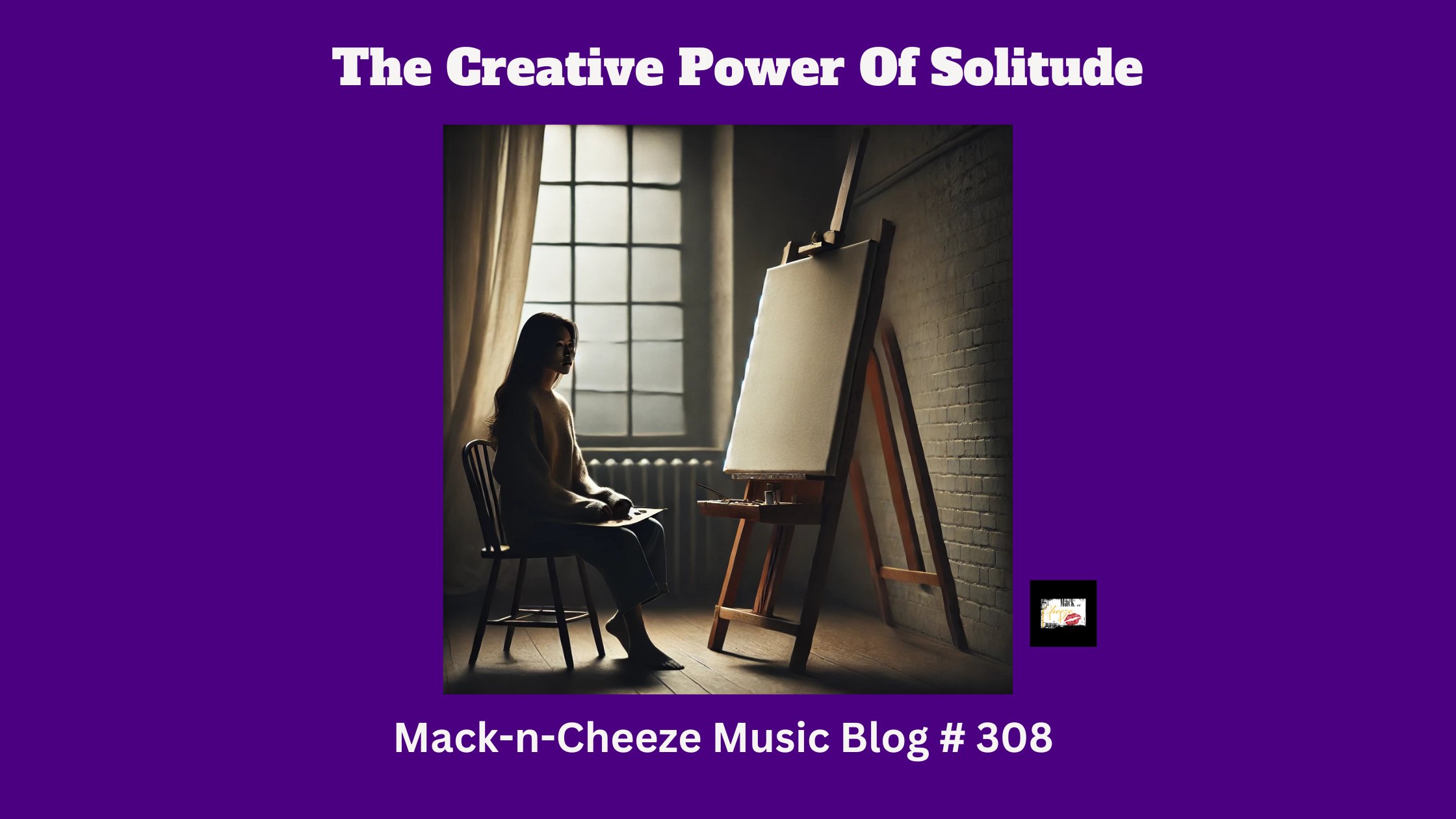
Solitude. A quiet room. A blank canvas. No noise, no eyes watching. Just you, facing yourself. The world fades, and the mind wakes up. Thoughts drift in, some sharp, some wild, others heavy. You listen. You sit with them alone, letting them swell, giving them shape. This is where creation starts, in the thick of it, with no one around but yourself.
Estimated reading time: 12 minutes

Solitude sharpens the mind. No voices, just your own thoughts drifting up. Outside, the world moves fast, but ideas settle and grow here. In this stillness, artists and thinkers across time have found their work. Beethoven walked alone through the woods, listening to the wind. Thoreau sat by his pond, watching the water ripple. Virginia Woolf wrote in a room with no one looking. They knew solitude’s worth.
Alone, there’s no need to rush, no eyes pressing in. The mind becomes clear, and ideas come in their own way. Free from others, thoughts break open, showing sides unseen in the cacophony of daily life. Solitude lets ideas breathe and find their strength, and in this silence, creation begins.
Table Of Contents
Solitude’s Impact on Memory, Insight, and Creativity
Solitude changes the brain. It clears distractions and lets the mind focus. Alone, the brain’s default mode network, the part for daydreams and deep thoughts, wakes up. Memories surface, ideas connect, insights flash. In solitude, people find new answers. Walking, showering, even sitting still—all become moments where ideas come alive.
Solitude sharpens focus, too. In social settings, the brain shifts between tasks, losing track. Alone, it locks onto one goal. The prefrontal cortex, the brain’s decision-maker, goes to work without breaking. In this state, artists and thinkers dive deep. They find new paths through tough ideas.
Then comes the flow. Flow is focus so complete, time disappears. The mind engages fully, and the work feels easy. Dopamine, endorphins, all the right chemicals kick in. Alone, a person can stay in flow without breaking for anything. Solitude keeps the mind steady, so the work can go on. In flow, creatives work at their best, creating what only they can.
Solitude gives people room to reflect. Alone, they look inward, find memories and emotions that shape ideas. Artists take risks, explore thoughts they might hide in groups. They make work that feels true, personal, deeply theirs. The quiet helps divergent thinking too—ideas that split in new directions, not just down one road. People feel free to try ideas that don’t fit the usual mold. Solitude makes it possible.
Solitude lets people face their own feelings. It is a place for private thoughts, for what is raw and real. Artists draw on this, making work that reaches others. In solitude, they can be honest, turning their own truths into art that lives. For creatives, solitude is no luxury.
Henry David Thoreau

Henry Thoreau went to Walden Pond on July 4, 1845. He moved into a small cabin on Ralph Waldo Emerson’s land. Thoreau’s plan was simple: live alone, live simply, live close to nature. He stayed for two years, two months, and two days, watching and writing. He wanted to understand life, nature, and himself.
The cabin was small, ten by fifteen feet. Inside, he had a bed, a table, a desk, and a fireplace. He grew beans, corn, and potatoes and bought little from town. His goal was to strip away all but the essentials. He wanted self-reliance and a clear mind. To him, that meant cutting out everything but what he needed. It meant looking at the world without clutter.
Solitude: Simplicity And Self-Discovery
At Walden, he swam in the pond, walked in the woods, and studied the plants and animals. He filled his journals with what he saw. Later, he would make a book from it all. He wanted to learn “what it had to teach” and not, as he said, “come to die and find I had not lived.”
Thoreau wasn’t always alone. Friends and family visited. He welcomed them, but it was the woods he preferred. He believed only in solitude could he find his authentic self. Only alone could he find his own mind. He kept his distance from society to understand his own thoughts.
While at Walden, he thought a lot about society’s way of life. The push for wealth and property. The race for status. He called it “quiet desperation.” Thoreau saw freedom in needing little. In Walden, he wrote about how he thought people lost themselves in their work and wealth, missing life’s simpler joys.
Thoreau left Walden in 1847. He spent seven years writing Walden, which came out in 1854. The chapters tell about his life by the pond, his thoughts on nature, and his view of society. Some parts talk about the animals and the seasons. Others, like the chapter “Economy,” question the way people live and work.
Walden was not a big hit at first. But it found readers over time. It became a cornerstone in American thought and literature. It still speaks to those who want to think for themselves, live simply, and feel close to the earth. Thoreau’s time at Walden stands as a true story of one man finding himself in solitude.
How Solitude Restores What Life Takes Away
In a fast-moving world, solitude can feel out of reach. Solitude clears the mind and sharpens the senses. It lets you hear your own thoughts and helps you think about what matters. A bit of quiet each day, a few minutes in the morning, an hour on the weekend, is enough to start. Treat it like a promise. No phone, no to-do lists. Just you, listening to what you have to say.
Sometimes you need a corner, a chair, a view. A place to sit with yourself. It doesn’t have to be much. Make it yours, free from noise. Keep it simple. The place becomes a retreat you can visit when you need space from the day.
A mini-retreat can do wonders. A few hours alone in a park, a walk in the woods, or a quiet day is well spent.
To experience solitude, a person needs to step away, not just from the noise around them but from their own space. Sitting alone with a book or scribbling down words isn’t true solitude. If you want to feel genuinely alone, try looking up at the stars. A kind of distance in those lights makes you see things differently, separating you from everything around you.
Solitude And Me
I like the sky, especially at night. Even better, sitting on the crest of a small dune amid driftwood. The surf caresses my ears with its power, losing myself in the constellations slowly pinioning. That’s when I feel a kind of respect, close but impossible to touch.
Nature has that pull when we’re open to it. It’s never hollow or trivial. Even the wisest seers can’t fully understand it, no matter how much they think they know. Nature isn’t something you can just figure out; it’s got a depth that sticks with you. The flowers, animals, and mountains reflect the best moments of our lives, the simplicity we knew as kids. That’s nature, pure and lasting.
Each moment alone becomes time with yourself, no matter where you are. With practice, the stillness grows.
A journal is a good company in solitude. You write down what comes up, your thoughts, ideas, even simple observations. Each entry deepens your own understanding. Each page builds a habit of reflection and helps you find clarity in the quiet.
A Quick Question
Do you have a hobby? My avocation is my hobby. Two goals in one. There is solitude in my rehearsal time. It’s a quiet pursuit that opens the mind. Especially reading and writing. These two activities renew me and let me glimpse new horizons.
A ritual can help you settle into solitude. Light a candle, make tea, and take a few deep breaths. You enter the quiet prepared, ready to meet yourself. Rituals remind you of what solitude brings, a moment to disconnect, to look inward.
Sometimes, it takes setting boundaries with others. Let them know when you need a quiet space. The people close to you will respect it. It gives you a safe haven where solitude is yours, free from interruptions. Solitude gives back what life takes from you.
Virginia Woolf

Virginia Woolf lived with solitude at the heart of her life and work. She wrote about it as a space to think freely, to find her voice. In A Room of One’s Own, she argued a woman must have money and a room to write. She knew the weight of these words, shaped by her own life and struggles. For Woolf, solitude was a way to see clearly and to create.
She grew up in a world of books and ideas, but she saw the walls around women. They lacked space to think and live on their own terms. In her essay, Woolf imagined Shakespeare’s sister—a woman as gifted as her brother, bound to a life of housework. She argued women needed freedom, room to think away from demands and expectations. She showed that solitude was not a luxury; it was a need.
In her novels, Woolf gave solitude to her characters. In To the Lighthouse, they retreat into themselves, each looking for meaning. She used stream-of-consciousness, writing as if inside their minds. Woolf believed in solitude as a way to reach the truth of oneself. Through Mrs. Ramsay and Lily Briscoe, she explored the quiet spaces of the mind.
Solitude held Woolf together. She fought with dark days, with waves of mental illness. Writing was her way through. In her diary, she wrote “moments of being” brief times of clarity. She poured her thoughts onto the page, a private act that let her see herself unfiltered. She wrote not just to make a living but to survive.
Woolf Knew Solitude Was Not Without Cost
Virginia Woolf knew the fragile line between solitude and loneliness, a line that could cut deep. She would often walk alone for hours or close herself off in her room, searching for peace in the quiet. But she wasn’t always alone. She kept those she loved close, leaning on her husband, Leonard, and the Bloomsbury Group, her circle of friends and fellow writers.
Solitude, for her, wasn’t about shutting people out. It was about finding a place where she could hear her own voice, balancing the pull of the world with the need to understand herself.
Her words still hold. A Room of One’s Own calls for freedom and privacy. Woolf showed that solitude is not escape; it’s a way to go deeper, to know oneself.
How A “Digital Detox” Can Enhance Solitude And Creativity
How do digital distractions affect you? Technology connects us and keeps us tied to screens, updates, and alerts. It’s hard for me to enter flow when the world constantly demands attention.
Airplane mode has become my necessary go-to. Yesterday, I was in flow in the studio. The phone was off. Four hours of straight concentration poured into the mix I was working on.
The news media severely impacts my mental well-being. At the time of this writing, the election is two days away, North Korea has sent troops to fight in Russia, and Iran is threatening to retaliate against Israel. I find all this so oppressive. I am making a stand to withdraw from national and world news. All the garbage is threatening my head space.
It helps to set boundaries. Check messages only at certain times. Turn off notifications. Some people do a “digital detox”—they set the phone down, log off, and stay off screens. These breaks clear space for thought, letting ideas grow without interruption.
Tech-free spaces help, too. A chair by a window, a quiet desk, a corner free from screens. These places become retreats, small escapes from the digital world. They make room for your own thoughts.
Mindfulness can pull you out of the noise. Meditation, deep breaths, even a walk in the garden. Without a screen, your mind has space to breathe, and focus returns. Creative ideas follow.
The goal is balance. Technology is a tool. It should not rule your mind. When you step away, you slow down. You hear your own voice. And in that quiet, you give your best ideas a chance to rise.
Ludwig von Beethoven

Beethoven walked alone in the woods, slipping away from the city for hours. He paced the trails, head down, lost in thought. Music filled his mind—melodies, harmonies, complete movements only he could hear.
He cleared his mind as he walked. Nature gave him ideas. He returned with new notes, a quiet joy within him. Birds sang, and he listened and took their songs. Nature was pure, not like the world of men.
The Case For Solitude
Solitude drives creativity. It brings memory and insight. Thoreau knew it at Walden Pond, Woolf in her quiet, Beethoven in the woods. Each found freedom alone, and each left the noise of the world.
Today, solitude is rare. We live connected, close to the screens and sounds that drain us. A break from the noise, a simple digital detox, lets us find the quiet again. In silence, we can think. We can feel it. We can create.
Solitude gives back what life takes away. It’s not isolation. It’s a deeper connection to ourselves, a way to touch the things that matter. Alone, we find the space to let our thoughts breathe, to shape something new and honest. And in that stillness, we are free.
Can We Help You?
Is there one thing we can do for you? It’s why we’re here.

Thank you for taking the time to read and reflect with me here. I hope this piece gave you a moment of quiet and inspiration in your day. If solitude speaks to you, or if you’ve found ways to reconnect with it in our busy world, I’d love to hear your thoughts in the comments—your perspective enriches this conversation.
If you feel someone else might benefit from this journey into solitude, please share this post. Let’s spread the idea that solitude can be a refuge, a source of strength, and a wellspring of creativity.
And if you’d like to stay connected for more posts like this, please consider subscribing. Thanks again for reading.
Want More Mack-n-Cheeze?
Videos - Bryan At Mackncheeze on YouTube
Podcasts – Bryan At Mackncheeze Apple Podcasts, Fountain, Spotify
Leave a Reply