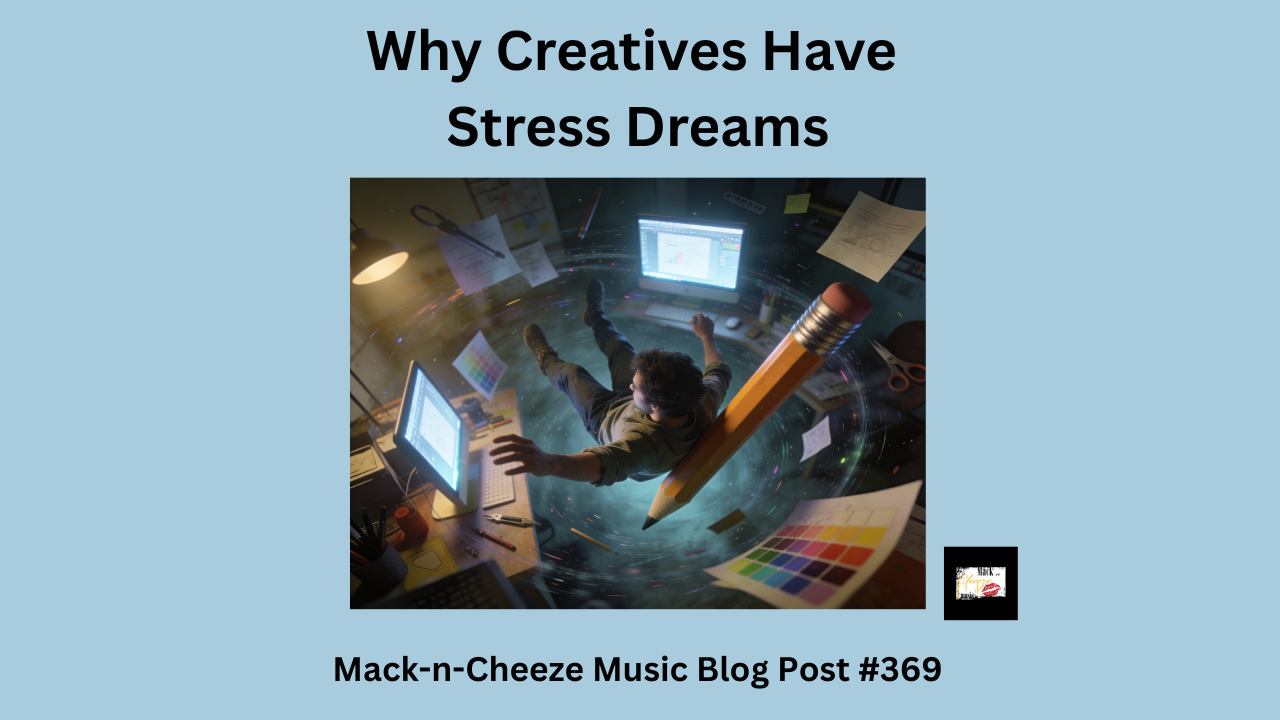
Stress dreams don’t come as metaphors. They come as emergencies.

There’s no slow buildup or warning, just the feeling that something’s already gone wrong and I’m too late to fix it.
For me, the stories are usually similar, only the setting changes.
Near Miss
I’m back in my old Plymouth van. The brakes are gone, not just soft or fading, but completely gone. The van fishtails down a hill. I’m spinning, like I’m on ice, trying to correct and swerve, waiting for the moment when metal finally hits something solid. A pole, a curb, a parked car. Anything.
But nothing happens.
There’s no crash, no sound of crunching metal or breaking glass. Just the awful spinning and the strange fact that I keep missing everything.
Another night, I’m underwater. A boat suddenly drops and sinks fast, as if pulled by a chain. I’m pinned against a rock, scraping along it like a drowning animal, trying to escape before the boat buries me. I break the surface at the last second, but there is no gasping for air like it’s the only thing that matters. Just release from the panic.
Then there’s the waiter dream. My section is at the bottom of a long escalator, two blocks from the kitchen. The patrons yell at me because service is too slow. Giving them a good experience is impossible.
And then, suddenly, I wake up.
I realize it isn’t real.
The humiliation doesn’t go away, but it loses its power. The dream keeps talking, but I stop letting it control me.
That’s the strange thing. These dreams aren’t about dying. They’re about being exposed to things I can’t control.
And somehow, every time, I make it out.
There’s no point in talking about the ‘naked’ dreams. That’s just another kind of exposure.
Disaster, Rehearsed

The common thread isn’t the van, the water, or the restaurant.
These are patterns.
Control, when there was no control to begin with. The mind jumps straight to the worst ending: crash, drowning, public disgrace.
Then there is no impact or final blow. A near miss and a breath of air.
There’s nothing mystical about it. It’s the brain running drills. A rehearsal of disaster, then releasing the pressure before it breaks.
It’s internal. Gnawing. Constant.
Creators live with a running scoreboard nobody else can see. Standards that keep moving. Work that’s never finished, sometimes abandoned. Ideas that won’t leave you alone. And the slow, corrosive fear that the best years are getting spent on survival instead of output.
Most jobs end when the shift ends. The uniform comes off. The brain powers down.
Creative work doesn’t do that.
It follows you home and sits in the corner of the room like an unpaid debt. It calls to you as you try to sleep and asks the same question every night:
How long before the dream becomes the truth?
That’s why the dreams aren’t poetic. They are about implied catastrophe.
Fire Drills In The Dark
The brain is not a prognosticator. It doesn’t cast dreams upon trying to explain the future.
Stress dreams are simulations. The mind runs drills, testing what happens when control disappears.
Why The Dream Chooses These Settings
The brain picks environments that do one thing well: they remove control.
Failed brakes are pure momentum.
Water is worse. There is no negotiation or argument. You don’t “push through” it. You either surface or you don’t. Underwater dreams are all about whether you can breathe or not.
The restaurant? You are an artist. Chances are, you know all about it. You chose the service industry for its flexibility. Gigs, releases, stage; you need to live your passion, somehow, some way.
Your job throws variables at you. Too many people with expectations, entitled, requiring you to deliver an outcome you can’t fully control. The penalty is your tip.
The setting changes, but the message stays the same.
Different scenarios. Same threat.
The Twist: The Way Stress Dreams Resolve
The strange part isn’t the disaster. The strange part is the ending.
Right when everything should go black, when the van should finally hit something solid, when the boat should crush you against the rock, when the restaurant should swallow you whole, nothing.
The dream slips.
It all turns into a near miss: a clean escape and a last-second breath.
My stress dreams, at least those I remember, never materialize into death or destruction.
That’s the twist. The pressure climbs and the body braces. The mind prepares for impact.
And then I am out.
Creative Anxiety vs Performative Anxiety
Two kinds of anxiety stalk creative people, and they don’t feel the same.

Creative anxiety happens in private. It’s the fear that the work isn’t good enough. The fear that the thing in your head, the clean, perfect version, won’t survive. That your execution will betray your skill, and your best ideas will come out smaller than they sounded in the beginning.
It’s not about applause. It’s about failure to translate.
Performative anxiety is different. It needs an audience. It’s the fear of being watched while you struggle, and of being exposed mid-process. The fear of failing in public before you’ve even had the chance to become competent.
Creative anxiety whispers.
Performative anxiety snarls.
Same fear. Different predator.
The Revelation
As creators, we bear a constant load.
Stress dreams drag our fears into the open. They take what we try to manage and convert into impact, suffocation, and public collapse.
And the question underneath it all is simple: can you handle the pressure without breaking?
Stress dreams reveal what we are when stripped bare.
We create and carry our expectations and standards. We carry the weight of what the work should be and what is unfinished, and the time of trying to build something that matters.
The mind does not let go of the pressure tests in the background.
That’s why the threats in these dreams aren’t dramatic. They’re degrading. They’re built around exposure, of being trapped, of being behind, and of being exposed while everything falls apart.
The real terror is of failure, not dying. We are revealed as incomplete.
Waking up ten years from now with nothing to show but effort and excuses.
No Off Switch

The real problem? The dream doesn’t stay in the dream.
This is our waking life: Everything runs hot and feels late. We need to be constantly doing, posting, fixing, improving, and proving ourselves. The pressure never stops.
Modern creative life is a permanent urgency.
Algorithms don’t reward depth. They reward frequency. Comparison doesn’t require effort anymore. It’s automatic. Noise is everywhere. Speed is the new religion. And if you stop moving for five minutes, the world convinces you you’re falling off the map.
So the nervous system never shuts down.
Even when you rest, your mind stays on duty. Still measuring, scanning, and bracing for impact.
That’s why the dreams keep coming.
They aren’t an interruption.
They’re a continuation.
And In The End
Stress dreams mean there is a part of your mind that never clocks out.
We dream about what matters, what could be lost, the things that could go unfinished, and what collapses under its own weight.
The disasters keep showing up because your brain is paying attention.
The dream isn’t trying to kill you.
It’s measuring what you’re willing to carry.
Can We Help You?

Comment if you’ve had dreams like these. The ones that keep coming back like they own the place.
Share it with someone who’s under pressure and acting like it’s no big deal.
And subscribe if you want more of this kind of writing. No fluff, no performance, just the real stuff.
Want More Mack-n-Cheeze?
Videos - Bryan At Mackncheeze on YouTube
Podcasts – Bryan At Mackncheeze Apple Podcasts, Fountain, Spotify