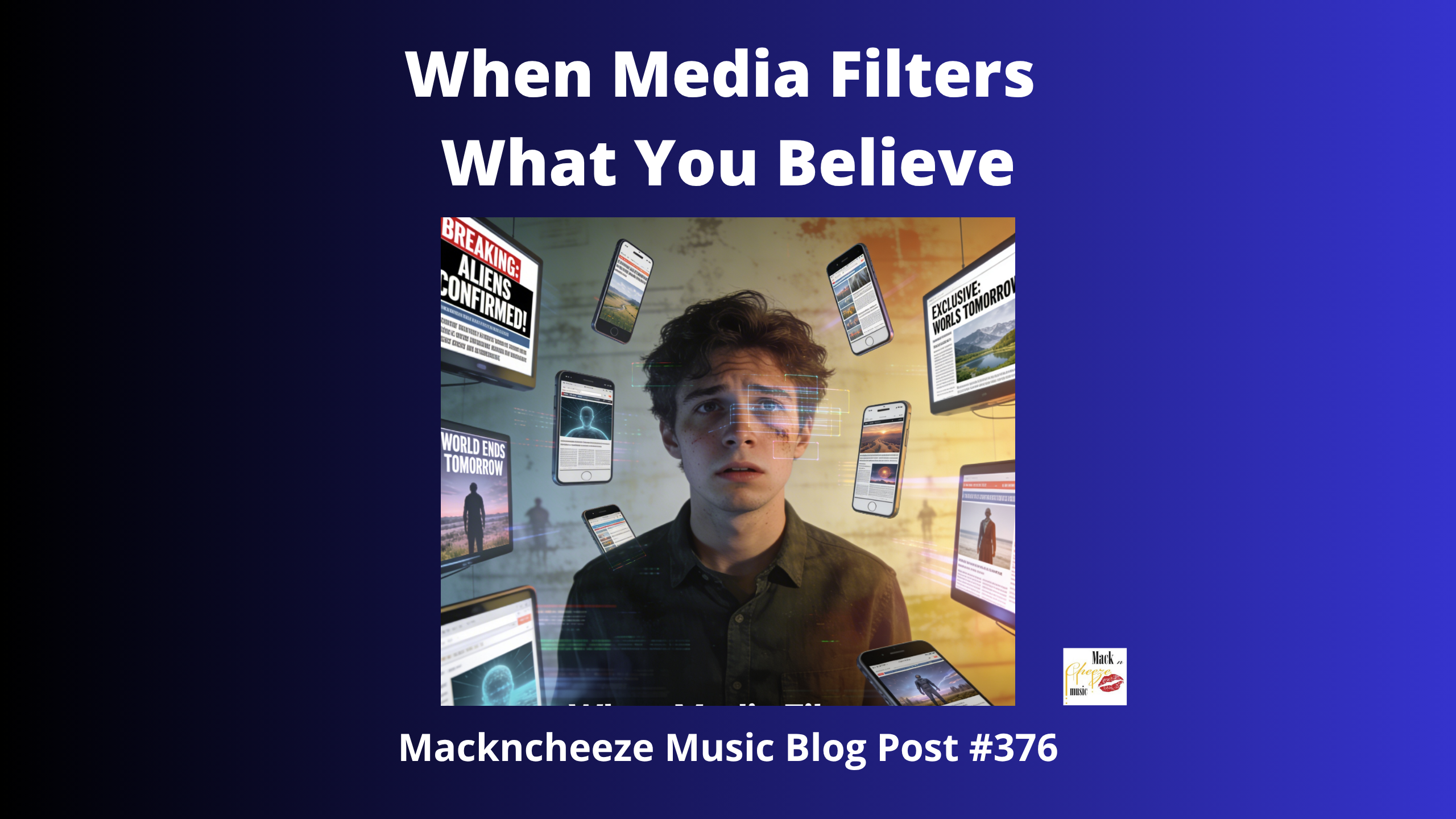
You’re scrolling your feed.
Something catches. You stop without thinking about it.
It’s clean. The point is right there. No effort to follow it. You stay.
Estimated reading time: 7 minutes

Table Of Contents
Right under it, another piece. You start it. You’re not sure if you get it. You’d have to think about it.
You don’t.
You keep moving. Then you try to go back, but it’s already gone.
Nothing dramatic. No decision announced. It just…happens.
One stays with you long enough to finish.
The other never gets the chance.
What decided that?
The idea of the post?
Or the way it showed up?
A complete mystery to me.
When The Filters Engage
That moment doesn’t happen in isolation. It shows up under certain conditions.
The feed isn’t neutral. What appears there has already been filtered. The filter ranks, sorts, pushes forward, holds back.
Interaction matters. Completion matters. The system pays attention to what gets finished and what doesn’t.
At the same time, your attention is limited. You don’t take in everything. You decide quickly what you want to look at, even when it doesn’t feel like a decision.
Under those conditions, speed becomes important to the algorithm.
Not as a preference. As a constraint.
When something is easy to take in, it’s more likely to be picked up by the system. Finish it, and that signal carries forward, keeping it in play.
That doesn’t make the content better. It makes it compatible with the environment it’s moving through.
From a human perspective, this can feel off.
If completion and interaction don’t influence what gets seen, then changing those signals shouldn’t change what shows up in your feed.
Content that takes longer to process would appear just as often. Finishing something wouldn’t increase its chances of being surfaced again. Engagement wouldn’t affect what follows.
Completion, interaction, and visibility move the post. Something is shaping the way it circulates.
The Mechanism Of Media Filters

The feed doesn’t sit still.
You open it. Certain posts are already at the top. Others never show up.
You scroll past something. Later, it’s back. Same post. Different position.
Some pieces keep returning. They hold their place. They move through the feed.
Most don’t. They appear once, then disappear.
You start to recognize what comes back and what doesn’t.
What rises tends to stay visible. What drops is gone quickly.
Recognition
It doesn’t look like a choice when it happens.
You come across one piece and it clicks immediately, so you stay with it to the end.
Another starts to unfold, but it doesn’t connect, so you leave it behind.
Another piece asks for a second pass. You don’t give it one.
Nothing unusual. No second thought.
A clear post holds your attention long enough to get to the end. One that takes time to unfold doesn’t.
Neil Postman
This isn’t a new problem. Not the content. The form.
Neil Postman pointed it out long before feeds and algorithms. In Amusing Ourselves to Death, he traced how the form of media shapes the kind of conversation that can take place within it.

Reading it now, it lands less like commentary and more like something already unfolding—written in 1985.
Print could carry a long argument. It had the space for it. Time wasn’t working against it in the same way.
Television shifted that. The pace changed. What held attention changed. The kind of material that moved through it changed as it did.
The argument follows from the fact that, if the medium matters, then changing the medium should change what gains traction within it.
If it doesn’t, you wouldn’t see a difference. The same kinds of ideas would move the same way, whether in print, on television, or in a feed.
They don’t.
The form of media changes. What keeps showing up and what drops out change with it.
Escalation
The form of media has shifted. The feed doesn’t just present material; it ranks it. Position changes. What holds stays. What doesn’t disappears.
Placement changes. What holds moves forward, and what doesn’t fades. The order isn’t fixed from one view to the next. The concept of linear progression is interrupted.
The movement of posts isn’t delayed. It responds as people interact. A post that holds attention tends to appear again. One that doesn’t is harder to find the second time.
There’s barely a gap between cause and response. The loop is tight.
Something appears. It holds, or it’s passed over. The next set reflects that.
Then it happens again.
If that weren’t driving it, what shows up wouldn’t keep favoring the same kinds of pieces.
Position wouldn’t shift in response to interaction. What shows up later wouldn’t track what held attention earlier. A post with no interaction would be just as visible as one that’s heavily engaged.
If there’s no relationship between how something is engaged with and where it appears, then presentation is neutral.
If that relationship shows up consistently, then what gets seen is being shaped by how it performs.
The Recurring Pattern

It doesn’t happen every time.
But it shows up often enough to notice.
Under these conditions, ideas that can be taken in quickly tend to appear more often than those that unfold slowly.
And once something appears more often, it has more chances to be taken as familiar.
Two Questions
Are you trying to win inside the system…
Or build something that survives outside of it?
For me? Both.
Today’s trends may be temporal. How long will all of this last? Those are the questions. Do we operate under the standards of permanence, or will all of this break apart?
And Here We Are
If the medium keeps putting the same kinds of ideas in front of you, they start to feel right. Simply because you’ve seen them more than once.
A line that lands quickly gets repeated. An idea that unfolds over time shows up less in that space.
Nothing is said out loud. No decision is declared.
But the range of what you’re willing to put forward can narrow without you noticing.
The challenge isn’t just getting seen.
It’s deciding what you’re willing to shape so it can be seen.
And what you’re willing to keep, even if it doesn’t move the same way.
Can We Help You?
What are you changing so your work can move? What are you refusing to change?

If you’re seeing this play out in your own work, don’t just nod and move on.
Send it to someone you trust.
Say what you’re noticing—where is this showing up for you?
Stick around if you’re trying to figure this out in real time.
Thanks for being here.
Want More Mack-n-Cheeze?
Videos - Bryan At Mackncheeze on YouTube
Podcasts – Bryan At Mackncheeze Apple Podcasts, Fountain, Spotify