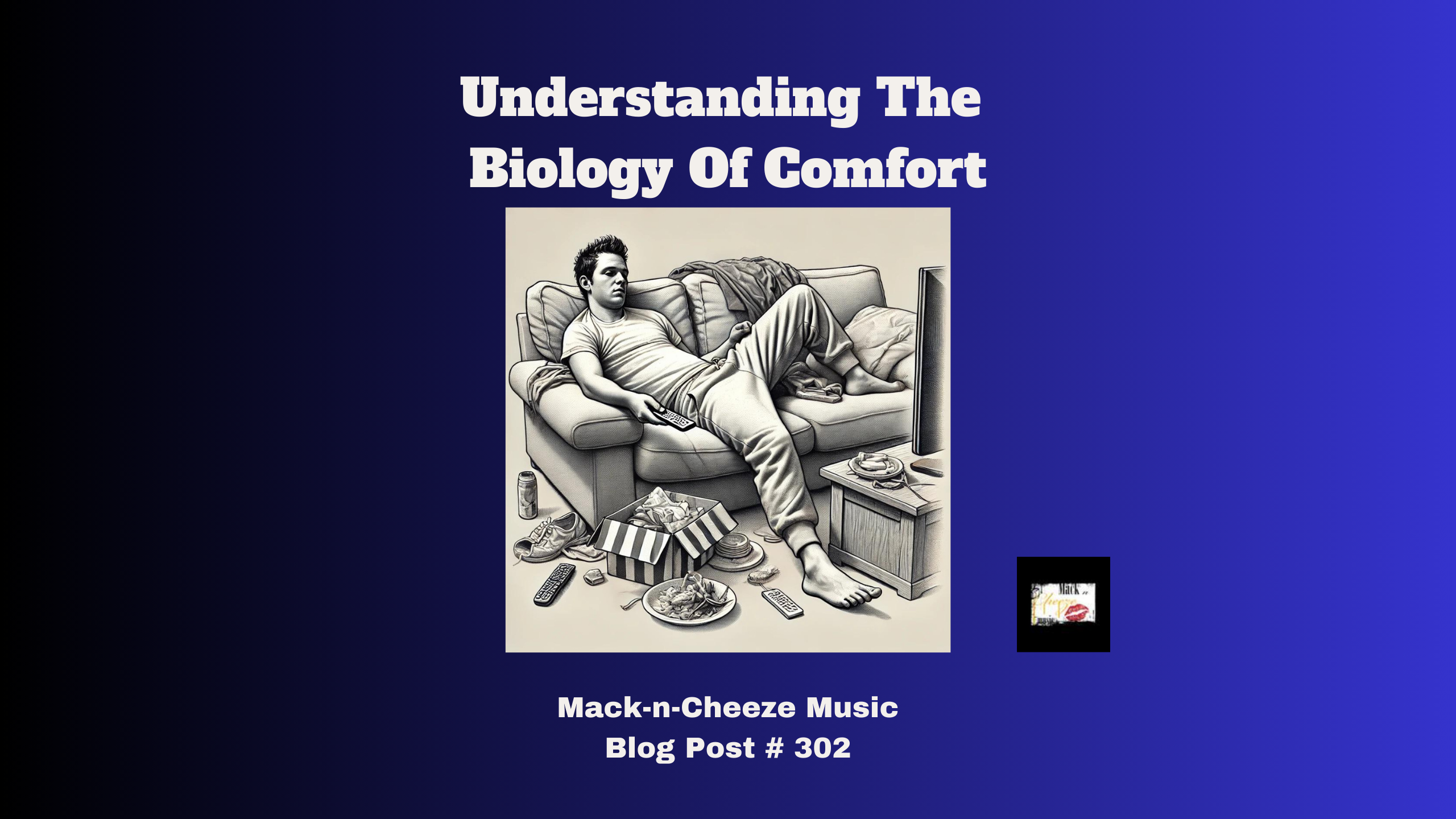
Understanding the biology of comfort.
Have you ever chosen the couch over a task that needs doing? Maybe you hit snooze, binge-watch TV, or avoid work. Comfort feels natural. But why do we favor ease over effort?
The answer is in our biology. We’re wired to save energy. Our ancestors needed this to survive, storing strength for critical moments. Today, it keeps us from reaching our potential.
Is there a way to balance comfort and growth? Is this just human nature, or can we change it?
Estimated reading time: 10 minutes

Table Of Contents
There are reasons we rest instead of work. It’s rooted in biology. Early humans needed to save energy to survive, and resting meant survival.
That instinct hasn’t changed.
Today, comfort brings a quick hit of dopamine, a reward. The brain craves that feeling. Hard work doesn’t give the same instant payoff, so we avoid it.
Our familiar habits reinforce what our brains know. Productivity creates stress, and we naturally want to resist that. Understanding these things allows us to perform more productively if that is our goal.
Evolutionary Roots Of The Biology Of Comfort

Our ancestors lived in a world where survival was not guaranteed. Preserving energy was paramount, and bad decisions might have led to death.
They were called hunter-gatherers. Until 12,000 years ago, the only way to feed themselves was through a nomadic or semi-nomadic lifestyle. They would gather food from the sources encountered through the wanderings of their social group.
To maintain this high level of activity required strength and energy. In addition, death lurked around every corner. If vigilance wasn’t maintained they would not be alive for long.
We live in a world of ease, but our instincts haven’t changed. Our bodies still act like our lives are at stake. We avoid effort because we’re wired to save energy.
A hunter-gatherer’s very existence relied on conserving energy. Now, it’s choosing the elevator over the stairs.
Modern life doesn’t demand the same effort to survive as it did in the past. Our instincts don’t know that. We take the easy way, not because we have to, but because it feels right. We can fight it, but the pull is strong. It’s who we are.
The Biology Of The Dopamine and Reward System
The brain seeks quick rewards. It craves what feels good in the present. Dopamine makes that happen. The chemical rewards us when we find comfort, food, or rest.
When you watch TV or scroll through your phone, dopamine kicks in. The brain loves that quick hit of pleasure. It makes you want more.
Hard work doesn’t give you that instant reward. The payoff comes later, and the brain isn’t patient. It doesn’t release dopamine for effort until the task is done. This is why we choose comfort. It feels good right away.
The battle is between what feels good now and what will feel better later. The brain always wants the easy win.
Dopamine creates a habit. The more you rest, the more your brain wants it. Comfort becomes familiar. The brain learns that comfort means pleasure, so it seeks it out over and over.
One of my chief weaknesses is sitting in front of the television, popping a bottle of wine, and eating. Do you want to talk about becoming zombie-like? I become the King Of Vacuousness. This usually happens late in the evening when all my guards are down. I call it ‘Flat-Screen-Vulnerable.’
This activity negatively impacts my goals and aspirations. The solution: get rid of the 72-inch. No more ‘Flat-Screen-Vulnerable.’
Stress, Cortisol, And The Biology Of Comfort

Cortisol is the stress hormone. When stress hits, cortisol floods the body. It gives us energy and focus, but too much makes everything more complicated.
When we expect stress, the brain sends out more cortisol. It prepares us for action, but it also makes tasks feel heavier. What once seemed easy now feels like a burden.
The brain learns to avoid stress. It links effort with discomfort.
The brain pushes us to avoid hard tasks. Do you wonder why we procrastinate? We choose comfort to dodge the stress and keep cortisol low.
Over time, it becomes a cycle. Stress brings cortisol. Cortisol brings discomfort. And discomfort brings avoidance. The brain takes the easy way out to escape the pain.
When we choose rest, cortisol levels drop. We relax and stress fades. This creates a calming effect, both physically and mentally. The heart slows, blood pressure lowers, and the brain enters a state of ease.
Rest activates the parasympathetic nervous system, the part of our biology that promotes recovery and relaxation. This system helps us recharge and repair. It’s the body’s way of saying, “Everything is fine. Save your energy.”
We are drawn to comfort because it feels safe. The brain knows that rest reduces stress and conserves energy. Over time, this creates a biological preference for ease.
Neuroplasticity: The Brain’s Adaptation to Comfort
The brain is capable of growing stronger and adapting to our life experiences. This is part of what is called neuroplasticity. It’s what we artists harness in our creative development.
Think of plasticity as a way to shape and mold neural networks. We are inherently able to adapt and change with the passage of time.
When we choose something easy, the brain builds a pathway making our choice easier the next time we choose it.
Think of it like a trail in the woods. Every time we choose ease, the trail gets clearer. Soon, it’s the only path the brain wants to take. Breaking out of it feels hard because the brain is used to following the same route.
Likewise, when we task ourselves to learn something difficult, our brains work in a similar fashion. Through repetition the neural links reconnect into different pathways that make the task less-and-less difficult. We musicians understand this. We basically create alternate paths that can readily be utilized on command.
Learning new skills and techniques can be hard at first. As we continue our efforts, the unfamiliar becomes familiar. What we are doing is rewiring ourselves. Through determination and effort, what was once difficult becomes natural.
Diligence And The Biology Of Comfort

Building diligence takes time. It doesn’t happen quickly. The brain is wired to choose comfort, not effort. Each time you push yourself, you’re fighting those habits. It’s not easy.
When you focus and push through, there’s no quick payoff. It feels like a struggle because the brain isn’t getting that rush of pleasure.
But over time, the brain changes. With each effort, new habits form. What felt hard starts to feel natural. It takes practice, day after day. Slowly, the rewards come, and they last longer. But at first, it’s all work. No quick win. Just the long g grind. That’s how you build diligence.
Speaking of practice-what are you doing to keep your chops up?
Are you hitting it everyday? Is there intensity in your work? It’s interesting how what used to be challenging is now a comfort zone.
My brain now loves personal practice so much, if I can’t spend the time working on my skillset, I start to vibrate. This is no joke-I’m dependent on the dopamine hit.
The Biology Of Comfort And The Science
The limbic system and the prefrontal cortex are always at odds.
The limbic system controls our emotions, pushing us to seek pleasure. It wants what feels good now—comfort, food, distraction. It works fast and doesn’t care about the future.
The prefrontal cortex is different. It’s where logic lives, telling us to think ahead, to work now, and reap the rewards later. It’s slower, careful, weighing every decision. It tells us to stay disciplined, but it takes effort to listen.
Most of the time, the limbic system wins. It’s quick and decisive. It pulls us toward what feels good, even when we know better. The prefrontal cortex fights back, but it’s slower. It needs more energy and more focus.
This is why we tend to avoid tough efforts. It’s a never-ending battle, especially for those of us who are constantly pushing forward. Discipline and making decisions that work around our limbic system are challenging. If we’re going to achieve our heart’s desire, we’ve got to work around it.
Procrastination

The limbic system drives procrastination. It wants pleasure and avoids discomfort. When a task feels hard, it tells us to put it off. It seeks the easiest path to save energy and dodge stress.
Procrastination keeps us in our comfort zone. Instead of facing the challenge, the limbic system, driven by its desire for pleasure, pulls us toward distractions—things that feel good in the moment. We check our phones, watch TV, anything to escape the work ahead.
Here’s a personal example. Does this sound familiar?
I open my phone to check the weather or verify a critical email. It’s just a quick glance. Immediately as the screen lights up, I’m distracted by a social media notification. I don’t even think; I just tap it. Mindlessness sets in, and I force myself to be conscious of my phone activity. It’s amazing how fast this happens.
My initial reason for checking my phone disappears; the spontaneity of the moment completely takes over. I am resolved to be more vigilant about managing my phone time.
This instinct to avoid effort goes back to survival. The limbic system was built to keep us safe and conserve energy. It’s still doing the same thing today, steering us away from anything that feels hard or draining.
When we procrastinate, we feel relief. The brain rewards us, and the cycle repeats. Each time we delay, it gets easier to put things off again. Meanwhile, the prefrontal cortex tries to push us forward, but it’s slower, and the limbic system often wins. That’s how procrastination takes hold.
And In The End
There are no surprises here. We seek comfort over effort. I hope this blog post sheds some light on why we tend to love picking low fruit in our endeavors. The instinct well served our ancestors. Today, there isn’t a saber-tooth tiger stalking us. We no longer live in such a hostile environment.
Understanding the brain’s need for comfort makes us see our choices more clearly. It’s not about laziness. It’s about fighting what’s been there for millions of years. But with effort, we can change. We can break through the need for ease and build something better. We find who we really are in the struggle between ease and effort.
Can We Help You?
Can we do one thing for you? That’s why we’re here.

Thank you for taking the time to read about the biology behind why we seek comfort. I hope this post gave you some valuable insight into how our brains are wired and how we can push past the instinct to rest. I’d love to hear your thoughts—drop a comment below and share how you balance comfort and effort in your life.
If you found this post helpful, please share it with others who might benefit from it. And if you want more content like this, make sure to subscribe so you don’t miss out on future posts exploring creativity, growth, and personal transformation.
Want More Mack-n-Cheeze?
Videos - Bryan At Mackncheeze on YouTube
Podcasts – Bryan At Mackncheeze Apple Podcasts, Fountain, Spotify
Leave a Reply