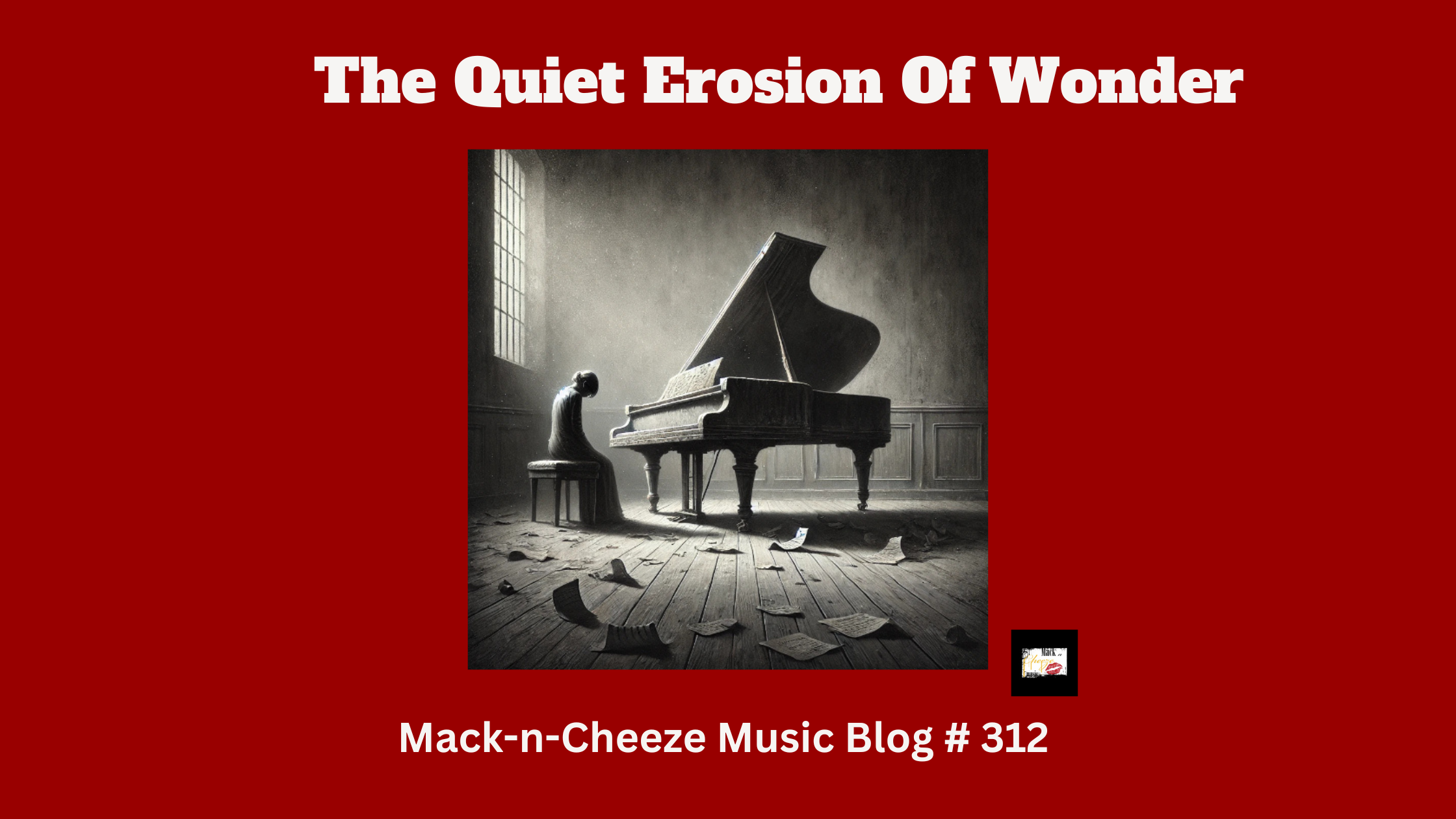
Wonder is one of life’s most exhilarating emotions. It’s the spark that ignites our curiosity, the sense of awe that makes something feel truly special, unique, and unforgettable. Yet, over time, this spark often fades. What we once cherished has changed. Because we have. This fading is what I call the quiet erosion of wonder.
Estimated reading time: 9 minutes

Table Of Contents
It happens slowly, almost imperceptibly. The melody you once loved turns to noise. The project you poured yourself into becomes just another thing on the shelf. People you couldn’t wait to see blend into the background. You stop looking. You stop feeling. Familiarity creeps in, quiet and slow, stealing the magic while you’re not paying attention.
Wonder isn’t a fleeting gift; it’s something we can nurture and rediscover by taking a closer look at how to resist its quiet erosion and find our way back to seeing the extraordinary in what we thought was ordinary.
The Erosion Of Wonder
The quiet erosion of wonder, is an often unnoticed phenomenon where repeated exposure to something diminishes its impact. What was once novel and exhilarating becomes ordinary. Boring and Mundane. We have only become accustomed to it. This transformation, rooted in human psychology, makes us take what once sparked our curiosity, joy, or admiration for granted.
When we first hear a song, see a painting, or meet someone new, it stirs something inside us. Our minds lights up. Everything seems brighter. But time changes things.
The more we see or hear it, the less it moves us. The edges blur. The details fade. What was once extraordinary becomes part of the background.
It isn’t boredom but rather how the mind works. It chooses what’s new and leaves the rest behind. The shine wears off, and we stop noticing what once held our attention.
The curse of familiarity touches every corner of life; our relationships, the thrill of early romance, the excitement of a new friendship, or the admiration for a family member’s quirks can fade into a routine. We stop noticing the kindness, effort, or unique qualities that once stood out.
Artists, musicians, and writers often experience it. Work feels uninspired or repetitive, not because the art is lacking but because they’ve spent so much time immersed in it. After countless encounters, a favorite song or painting may no longer stir the same emotions.
Familiarity steals the wonder. The landscape that once took your breath away becomes just a view.
You feel restless, wanting something new. You forget the richness of what’s already there.
Why It Matters

Habituation is a basic psychological and neurological process where an individual’s response to a stimulus decreases with repeated exposure. It’s a form of non-associative learning, meaning it occurs without interconnecting the stimulus with a reward or punishment. This process is fundamental to how organisms adapt to their environments, allowing them to conserve energy and focus on novel or significant stimuli.
What was once bright and alive begins to fade. Not because it has changed but because we are programmed to stop caring.
Over time, the details vanish. The thrill disappears. What once felt extraordinary becomes part of the background. The spark is gone, and we don’t even notice when it left.
This happens everywhere. In love, we stop seeing the things that made someone special. In art, the joy of a fresh idea fades into a chore. Even a sunrise can lose its beauty when we see it too often.
The familiar becomes invisible. We chase the new, thinking it holds the answers. But the beauty we seek is still there, waiting.
But this same comfort can slip into complacency. As the brain desensitizes to repeated experiences, it stops noticing the nuances and details that once made them special. The thrill of discovery fades, replaced by a sense of monotony. What once ignited excitement now feels ordinary, and we begin to take it for granted. This is the hidden cost of habituation: the loss of appreciation for what is familiar.
Sonny Rollins

Sonny Rollins is celebrated as one of Jazz’s most innovative and influential tenor saxophonists. Without a doubt, my favorite sax player of the age.
Rollins’s playing style was marked by a unique blend of technical mastery, emotional depth, and a restless drive for improvisational exploration. His command of melody was superb.
Sonny Rollins was at the top of the jazz world in 1959. But he wasn’t satisfied and believed his music was missing something; the depth he sought wasn’t there.
So he stepped away. No more shows, no more records. He found his place on the Williamsburg Bridge in New York. Alone, high above the city, he practiced. The bridge gave him space. No distractions, no noise, just his horn. He worked for hours daily, shaping his sound, chasing something real, searching for the flame that once ignited him.
For almost three years, he stayed out of sight. When he returned in 1962, he had what he’d been searching for. His album The Bridge proved it. It wasn’t just music; it was renewal.
In 1968, Rollins stepped away again. This time, he traveled east, studying yoga and meditation in Japan and India, living simply and searching for balance. When he returned, his music carried the weight of those lessons. It had purpose and meaning.
Rollins didn’t walk away from music. Each break was a choice, a refusal to settle. He left the stage to find himself and came back stronger each time. His legacy isn’t just the music he made but the courage to pause and rediscover the wonder in it.
Manifestations Of Erosion

The curse of familiarity weighs heavy on creativity. The spark that once burned bright fades. At first, our work feels alive; it is new, full of passion, excitement, and promise. But as time passes, the shine dulls. The thrill of creating turns into a routine.
Overexposure creeps in. Creators spend hours with the same notes, strokes, or words. What felt fresh begins to drag, and the once exciting details now feel like repetition. The wonder is gone, replaced by questions. Is this any good? Has it all been done before? Doubt grows, and the passion fades.
The curse hits hardest when it blinds the creator. Others may see brilliance, but the artist sees flaws and efforts stretched thin. Yes, it is subjective, but the work feels stale, and objectivity subsides.
Familiarity also locks the door to growth. When creators stick too long with their habits, the work stiffens. The process becomes safe and predictable. The freedom to explore disappears, and with it, the thrill of the unknown disappears.
The Destructive Urge: Confronting the Quiet Erosion of Wonder
While some artists retreat to rediscover their sense of wonder, others take a more radical approach: destroy their work. This act of destruction is not simply about anger or despair but rather a visceral response to the quiet erosion of wonder. When the magic fades, the work feels dead.
Michelangelo smashing his Pietà is a striking example. Dissatisfied with the marble or fearing judgment, he took a hammer to Christ’s limbs. The sculpture, once full of wonder, had become unbearable. What ever Michelangelo’s motivation, the destruction was brutal, but it was honest. He refused to let it stand as something less than what it could be.
With his obsession for perfection, Claude Monet confronted the same erosion of wonder late in his life. Frustrated by his waterlily paintings, he slashed and destroyed at least fifteen canvases. The wonder had faded for Monet, and the only way to move forward was to strip away what no longer felt extraordinary.
John Baldessari burned over a decade of his work. It wasn’t just destruction. It was a statement. He took the ashes and made them into art. It marked the end of one chapter and the start of another. He found wonder again in the flames and redefined what art could mean.
How Destruction Speaks to the Quiet Erosion of Wonder
Here is a poignant question: Is the urge to destroy your art and work a creative urge? In this sense, destruction becomes a means of clearing the fog that familiarity and disillusionment can create. It’s a violent yet transformative response to the slow fading of awe. By destroying their work, artists directly confront the quiet erosion of wonder, tearing down what no longer inspires to make room for what can.
Art is never still. When the wonder is gone, the only way forward is to begin again. Destruction, in whatever form, clears the way.
How Can We Help You?
Is there one thing we can help you with? That’s why we are here.

Thank you for taking the time to read and reflect with me here. I hope this post gave you some inspiration. Are you experiencing the erosion of your passion? What are you going to do about it? I’d love to hear your thoughts in the comments.
Please share this post if you feel someone else might benefit from reclaiming their passion. Let’s spread the idea that freeing our minds from all these built-up preconceptions is a source of creativity.
And if you’d like to stay connected for more posts like this, please consider subscribing. Thanks again for reading.Want More Mack-n-Cheeze?
Videos - Bryan At Mackncheeze on YouTube
Podcasts – Bryan At Mackncheeze Apple Podcasts, Fountain, Spotify
Leave a Reply