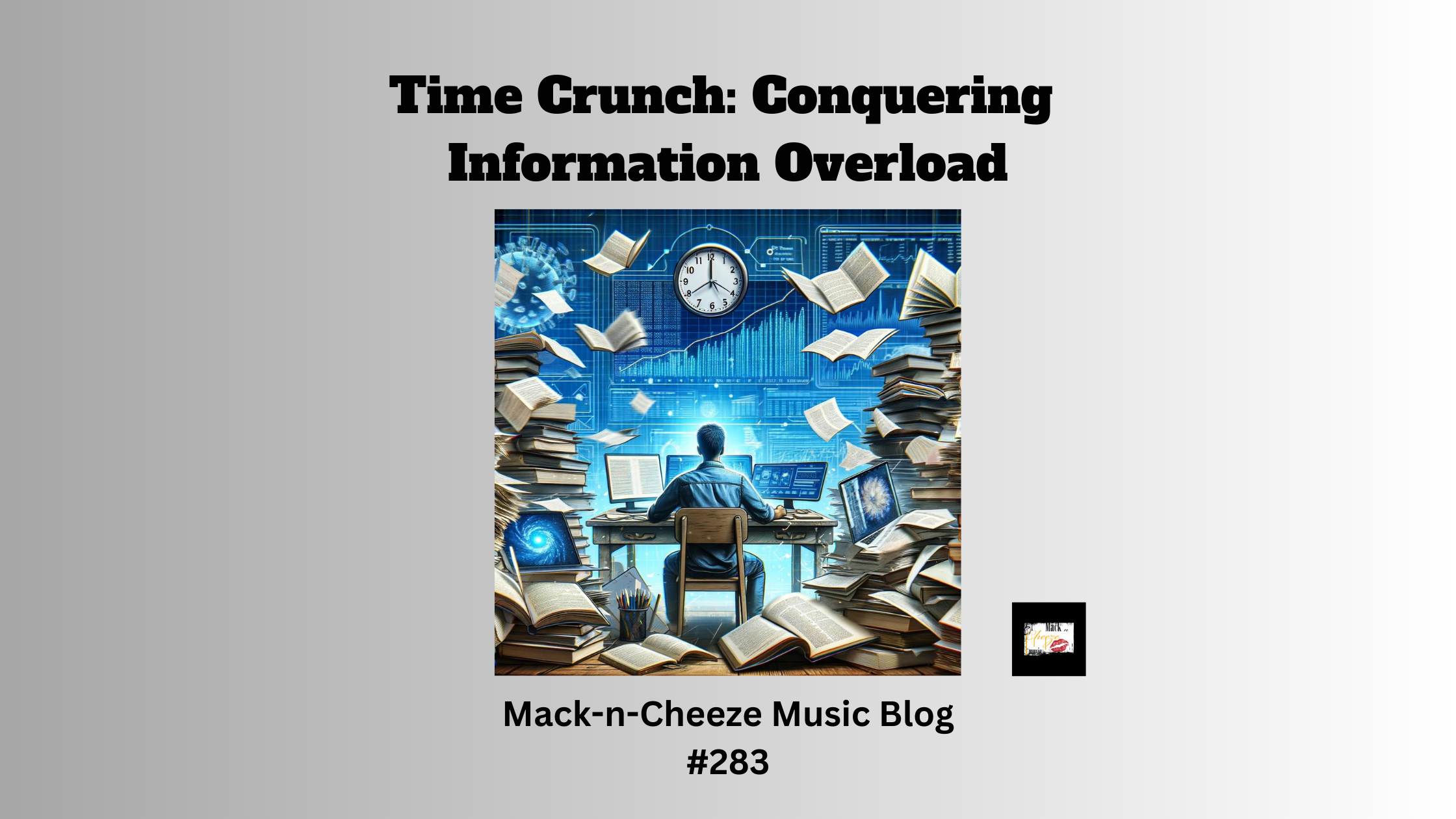
Information, too much information. I remember it clearly. I had just wrapped up recording a podcast episode and sat down to research my next blog post. The laptop screen before me was a battlefield. There were open tabs for articles, videos, tutorials, and eBooks. Each one was a fragment of information I felt compelled to digest. The volume was overwhelming. Social media notifications, emails, news alerts, each one clamoring for attention. I felt paralyzed, unsure of where to begin, and overwhelmed by the endless data stream. The distraction of all this content was sapping my energy; stalling my productivity. Sound familiar?
Estimated reading time: 9 minutes

Table Of Contents
Sorting Through Information With Purpose
In the age of digital noise, we face a barrage of information everyday. It comes at us like a storm; relentless, unyielding. For those of us who live by our craft, this is both a gift and a curse.
We creatives need space to breathe. Our vision can’t flourish with a cluttered mind. When drowning in a flood of information, it’s hard to find a respite. We want a clear, quiet place where ideas grow. Managing this overload keeps the mind quiet and creativity alive.
Time is everything, the most important resource. For artists juggling projects and deadlines, managing our resources is key. Controlling the flow of information allows carving out more time for your work. This leads to better output and a higher quality of creation.
Understanding Information Overload
Information overload is the overwhelming feeling caused by receiving too much information. It occurs when the volume of data exceeds our processing ability. The results? Stress, confusion, and difficulty making decisions.
Information bombards our brains every second. That’s approximately 11 million bits a second. However, we can consciously process only about 50 bits per second, making it crucial to filter and manage the incoming data to avoid overload.
I’ve learned that thinking means mastering your thoughts. It has taken a long time, but there it is. Our ruminations are conscious choices. It’s about being aware and deciding what to focus on and how to see things. Without this, creativity can be overwhelming. The real value in the artistic journey is avoiding a life on autopilot. This might seem overstated, but it’s true. The routines and repetition in an artist’s life aren’t often talked about. Those who walk this path know them well.
Information overload crushes my spirit. The deluge of emails, social media, and endless research suffocates creativity and breeds an overwhelming sense of anxiety and burnout. I, for one, need peace and clarity for the true creation process.
Creativity demands a serene mind. Too much information tangles thoughts, leaving no room for genuine inspiration. The subconscious brain’s capacity is infinite, but the conscious mind is not. The more we clog our conscious sphere, the less effective we become.
The constant barrage of information is a thief of focus. Notifications and updates disrupt the flow, shattering our concentration. The bandit steals our precious time; returning to our creations is almost impossible.
Constant exposure to information, especially from social media, weakens originality. Artists might imitate what they see, diminishing their unique voice. Controlling this intake is crucial to preserving an artist’s true vision.
Identifying The Real Priorities
I could offer you the usual self-help chatter. I’m not going to give you the “how” but the “why.” Here are the genuine reasons to focus on what information you filter.
How Are You spending Your Energy?

The Greek word for energy is “ἐνέργεια” (energeia). “Energeia” translates to “being at work” or “in activity.”
Speaking Of Greeks
Aristotle saw “energeia” as being alive and true to yourself. It’s crucial for understanding how things change and grow. “Energeia” also means practicing virtues every day. To live well, you must always strive to be better. As well, for us, that means becoming better artists.
Plato focused on ideals and forms. Yet, the idea of energy, both physical and metaphysical, was there in how these forms come to life in the material world.
In modern physics, “energy,” means the ability to do work. It’s key to understanding everything from mechanical motion to thermodynamics and quantum mechanics.
In biology, energy is vital. It’s the core of metabolism, cellular processes, and how living organisms function.
In psychology, energy refers to the vitality and drive behind our behavior and thoughts. It is connected to attention, willpower, and resilience.
Being in a state of “flow” means you’re fully immersed and energized by an activity. This reflects the ancient idea of “energeia” as reaching your potential in action.
How Are You Channeling Information?

How’s your “daimon”? Not your demons, the dark things. I mean your guiding spirit.
The term “daimon” comes from ancient Greek mythology and philosophy. The Greek word δαίμων (daímōn) originally meant a divine power, fate, or a guiding spirit. Yes, a divine power. Fate. This is good.
In early Greek literature, daimons were seen as lesser gods or spirits influencing human affairs. Socrates spoke of his personal daimon, an inner voice or divine sign guiding his actions. Who is guiding your vision?
During the Hellenistic period, daimons were linked to personal destiny or fortune. In Roman times, the idea merged with the “genius,” a personal guiding spirit or tutelary deity of a person or place.
Carl Jung and later psychologists saw daimons as parts of the human psyche, representing inner drives or unconscious forces influencing behavior and creativity.
Today, we use the term to describe an inner spirit, inspiration, or driving force behind creative and intellectual work.
What information do you need to spark your Daimon?
Do You Want To Be A Creative Genius?
The word “genius” comes from the Latin “genius,” an attendant spirit guiding a person or place. It ties to the verb “gignere,” meaning “to beget” or “bring into being.” What are you creating with your information?
A genius in ancient Rome was a protective spirit for a person or place. Each person had one, shaping their character and fate. These spirits were honored in public rituals and private worship, often shown as winged figures.
During the Middle Ages, the idea of genius merged with guardian angels. The Renaissance revived classical ideas, seeing geniuses as individuals with exceptional intellect and creativity. Thinkers like Ficino and Pico della Mirandola linked genius to divine inspiration.
In the Enlightenment, genius meant extraordinary intellect and creativity, celebrating those who advanced human knowledge. The Romantics saw geniuses as visionaries, often misunderstood, with a mystical ability to express profound truths.
Today, genius refers to someone with exceptional abilities in science, art, sports, literature, and music. Modern psychology tries to measure it with IQ tests, but genius also means creativity and originality. The concept of genius inspires people to pursue excellence and innovation in all fields.
The term “genius” describes people with remarkable talents and achievements. Think of Albert Einstein, Leonardo da Vinci, and Mozart. They are often called geniuses for their work.
The idea of genius inspires others to strive for excellence and innovation. It serves as an ideal in education, business, and personal growth.
The Result Of Information Overload

They say we are the average of the five people we spend the most time with. What if we’re the average of the information we let into our minds?
That makes us mediocre.
The word “mediocris” is Latin and became the English word “mediocre.” “Mediocris” comes from “medius,” meaning “middle,” and “ocris,” meaning “rugged mountain” or “sharp point.”
“Mediocris” translates to “midway up a mountain” or “moderate.” In Latin, it described something average or in the middle range, neither very good nor very bad.
To be mediocris means you started climbing the mountain but stopped. Was it your thoughts or bad information? Maybe both. The point is: you were climbing. You get the analogy.
We want to continue climbing.
If we don’t know the why, we’ll never know the how. Get rid of the bad information. Ignore it. You know the sources. Choose what you take in and what you reject. It doesn’t matter how, just do it.
Is The Information You Let In “Eudaimonic?”

“Eudaimonic” comes from the Greek word “eudaimonia.” Aristotle used it in his ethics to describe the highest human good or living well. “Eudaimonia” combines “eu” (good) and “daimon” (spirit), meaning “good spirit.”
Aristotle saw eudaimonia as the highest aim of life, not fleeting pleasure but achieving one’s potential through virtue. It means living a meaningful life. You focus on self-realization and personal growth. It’s about aligning with one’s true self and values, leading to fulfillment and purpose. Pursuing eudaimonia involves activities that foster growth, understanding, and strength. Finding one’s purpose is key to this well-being.
Live your purpose with good information, dump the junk.
Can We Help You?

Thank you for journeying with me through the labyrinth of our digital world. Your time is precious, and I’m honored you’ve chosen to spend it here, delving into the depths of creativity and battling the relentless tide of information overload.
If this piece resonated with you, if it struck a chord within your artistic soul, I urge you to share it. Spread the word to fellow artists, dreamers, and creators. Let this be a beacon of hope for those drowning in the same sea of endless data.
I want to hear your thoughts. Leave a comment below and share your experiences with information overload. How do you navigate the digital storm? What are your strategies for preserving your creative essence? Your insights are invaluable, not just to me, but to our entire community.
Lastly, if you haven’t already, subscribe to stay connected. Join us on this journey of creativity and self-discovery. Let’s build a sanctuary for artists, a place where we can all find clarity, inspiration, and the courage to pursue our true vision. Together, we can rise above the noise and let our voices be heard.
Want More Mack-n-Cheeze?
Videos - Bryan At Mackncheeze on YouTube
Podcasts – Bryan At Mackncheeze Apple Podcasts, Fountain, Spotify
Leave a Reply