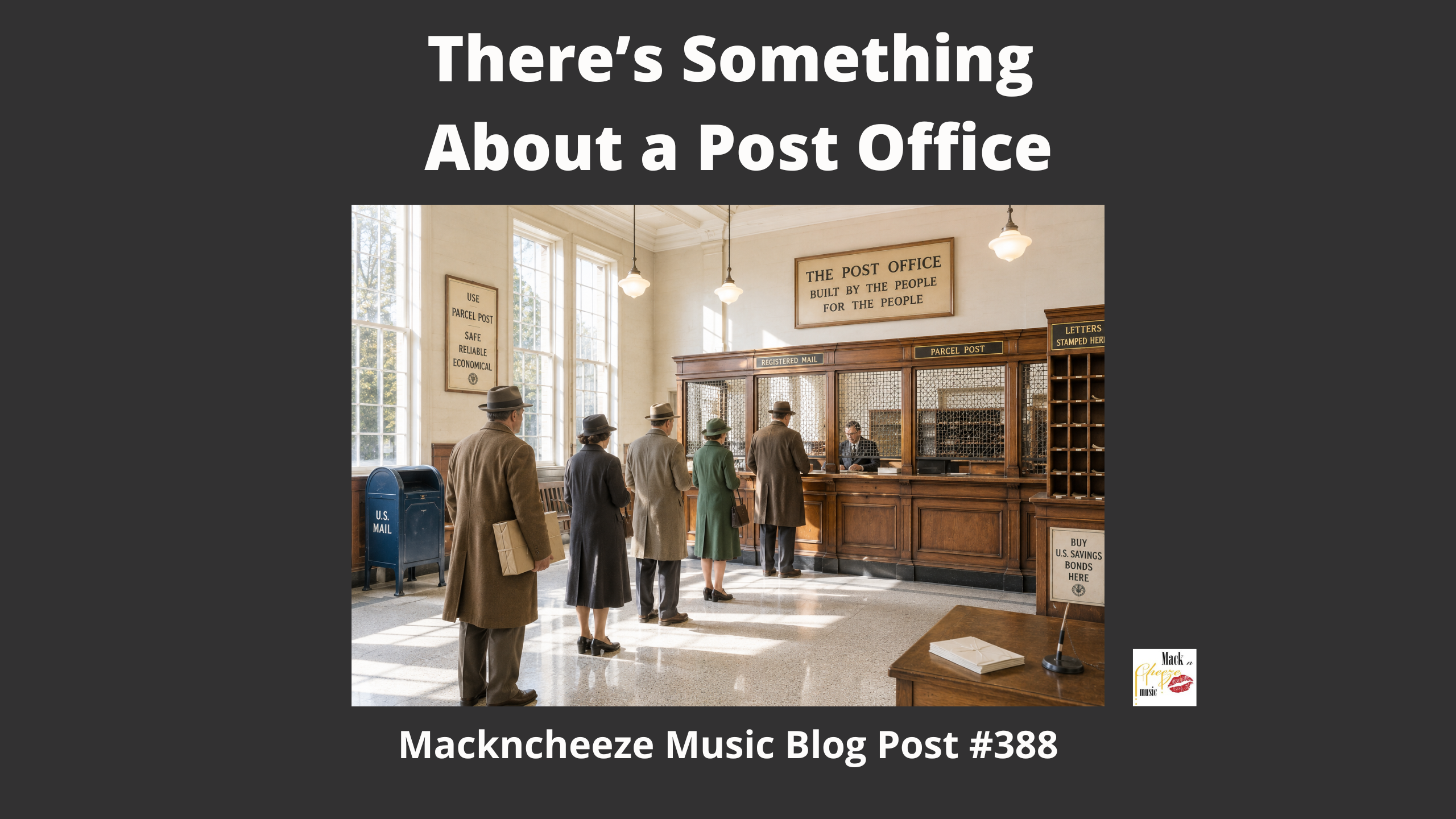
There’s something about a post office.
Estimated reading time: 8 minutes

Table Of Contents
Not the building itself. Most of them are fairly plain. The floors are practical. The counters are practical. The lighting is rarely memorable.
Yet they all seem to share the same atmosphere.
I’ve mailed packages from small towns, busy cities, and places I can barely remember stopping in. The buildings changed. The feeling rarely does.
A post office line only moves a few feet at a time. Someone adjusts a box sealed with too much tape. Another customer fills out a form on a narrow writing shelf. The only sounds are the shuffle of feet, the opening of a mailbox door, and the occasional exchange of soft voices at the counter.
This is striking because it has become increasingly rare. There is almost a religious solemnity at a post office.
Most public spaces compete for attention. Airports are noisy. Coffee shops are busy. Stores are filled with advertisements, music, and screens. The post office feels different. The room seems to carry a sense of purpose that nobody has to explain.
I wonder why?
The answer isn’t obvious. It certainly isn’t because mailing a package is exciting.
Look around.
Every person in the room is sending something somewhere.
A box wrapped for a birthday. Important documents heading across the country. Letters addressed to people I will never meet.
Each letter and package represents a story already in motion. Nobody else in the post office knows what’s inside. Nobody knows whether the contents will bring good news, bad news, relief, celebration, or closure.
The place feels less like a government building and more like a place where human intentions pass thoughtfully from one set of hands to another.
The Atmosphere of Significance

The post office: no one there is trying to sell you anything, except maybe insurance for your package.
It’s not obvious until you compare your experience everywhere else.
The grocery store wants you to notice products you never intended to buy. The airport wants you to notice restaurants, gift shops, and advertisements. Every website seems to be competing for another click, another view, another moment of attention.
The post office asks for remarkably little.
Everyone who walks through the door already knows what they are going to do.
The package was packed at home, and the address was already written.
Decisions have already been made. Nobody needs to be tempted or persuaded. Perhaps that changes the atmosphere?
People aren’t deciding what to do. There is very limited spontaneity.
A father sends a package to his daughter. A business owner mails documents.
Someone is returning a gift.Someone is shipping a book.
Intentions differ, but each person has arrived with a predetermined task.
That sense of purpose is harder to find than it used to be.
Distraction. Twenty-first-century life. Attention is constantly redirected toward the next notification, headline, or hard sell. These days, we have become used to being open to interruption. When did that happen?
Thank God, the post office feels almost resistant to that idea.
People arrive with a purpose. They complete what needs to be done. Then, adios.
The buildings are usually unremarkable, except for the Depression-era works of architectural beauty. Most are plain enough that you would never photograph them.
Yet inside those ordinary walls, thousands of decisions are carried one step closer to their destination.
Surrounded by Invisible Stories

What happens to a package after it disappears behind the counter?
Most of us never find out or even care.
A clerk scans the label and places the package in a cart. From there, it enters a system so vast that no single person can see it all. Trucks arrive. Trucks leave. Containers are sorted. Aircraft take off. Facilities process thousands of items every hour.
The package simply vanishes from view.
Yet nobody in line appears particularly troubled by this arrangement.
People hand over wedding gifts, legal documents, family photographs, and irreplaceable items. They accept a receipt, tuck it into a wallet or purse, and walk out the door.
That level of trust is remarkable when you stop to think about it.
Most of the time, we want control: updates, confirmation, visibility, and certainty.
The post office asks for something different. It asks us to let go.
Perhaps that is part of the atmosphere I have noticed.
Everyone in the building is participating in the same act. They arrive carrying something that matters to them. A few minutes later, it belongs to a process they cannot see and people they will never meet.
The stories inside those packages remain invisible.
So do the journeys that carry them forward.
For a brief moment, the room becomes a gathering place for people practicing the same difficult skill: trusting that what leaves their hands will eventually arrive where it needs to go.
The Creative Connection
The longer I ponder the post office, the more familiar it feels. There is something about the post office.
Not because artists spend their days shipping things. Most of the time, they are doing the opposite.
Our audience never sees the process. They only trust the end result, the actual delivery.
A songwriter sits with a melody that won’t reconcile. A painter looks at a canvas, ready to trash it, but takes a step back to look again. A writer rewrites the same paragraph for the tenth time.
Weeks, months, and sometimes years pass.
The audience does not see any of this.
They encounter the finished song, book, and performance.
What they receive is the result of a largely invisible process.
The package arrives long after the preparation, after a journey that was never paid attention to.
Eventually, there comes a day when the package is sealed.
The songwriter stops changing lyrics.
The painter puts away the brushes.
Then the work is placed on the counter, ready for delivery.
That is the journey of creative work.
Once the book is published, the record released, or the curtain raised, the work begins traveling through lives the artist will never see.
And like the mail, some recipients will open it immediately.
Otheres will set it aside for months.
Some may never understand why it was sent in the first place.
The sender no longer controls the delivery.
Just like Elvis, the package has left the building.
Destination Matters

The more I think about it, the more I understand why the post office measures success differently from the rest of society.
A package is not considered successful because it traveled a long distance or thousands of people saw it.
It’s not successful because it generated attention. The package succeeds when it reaches the correct address. Everything else is secondary.
The light switch is toggled.
Artists spend a great deal of time thinking about exposure. We worry about audience size, book sales, streams, followers, and all the ways our work might reach more people. Those things have their place.
Yet the post office reminds us of a simpler question.
Who is this for?
Every package in the building has a destination. A specific address. A specific recipient.
The system is designed to get it there.
Creative work often works the same way.
A song may speak to someone going through a difficult season. A book may arrive in the hands of a reader at precisely the right moment. A painting may stop one person in their tracks while hundreds of others walk past without noticing.
That does not mean the work failed.
It means the work found its destination.
Perhaps that is another reason the post office feels different.
Everyone standing in line is hoping for the same thing.
Not that their package reaches everyone.
Only that it reaches the right person.
Can We Help You?
Is your work reaching the people it is meant to reach?

Thank you for spending a few minutes in this little corner of the internet.
If this post brought someone to mind—a musician, writer, artist, or friend who might appreciate it—please share it with them.
We also enjoy hearing your thoughts. What places have made you stop and notice something deeper hiding beneath an ordinary experience?
If you’d like to follow along as we continue exploring music, creativity, and the creative process, consider subscribing so you don’t miss future posts.
Safe travels, and may your next important package find its destination.
Want More Mack-n-Cheeze?
Videos - Bryan At Mackncheeze on YouTube
Podcasts – Bryan At Mackncheeze Apple Podcasts, Fountain, Spotify