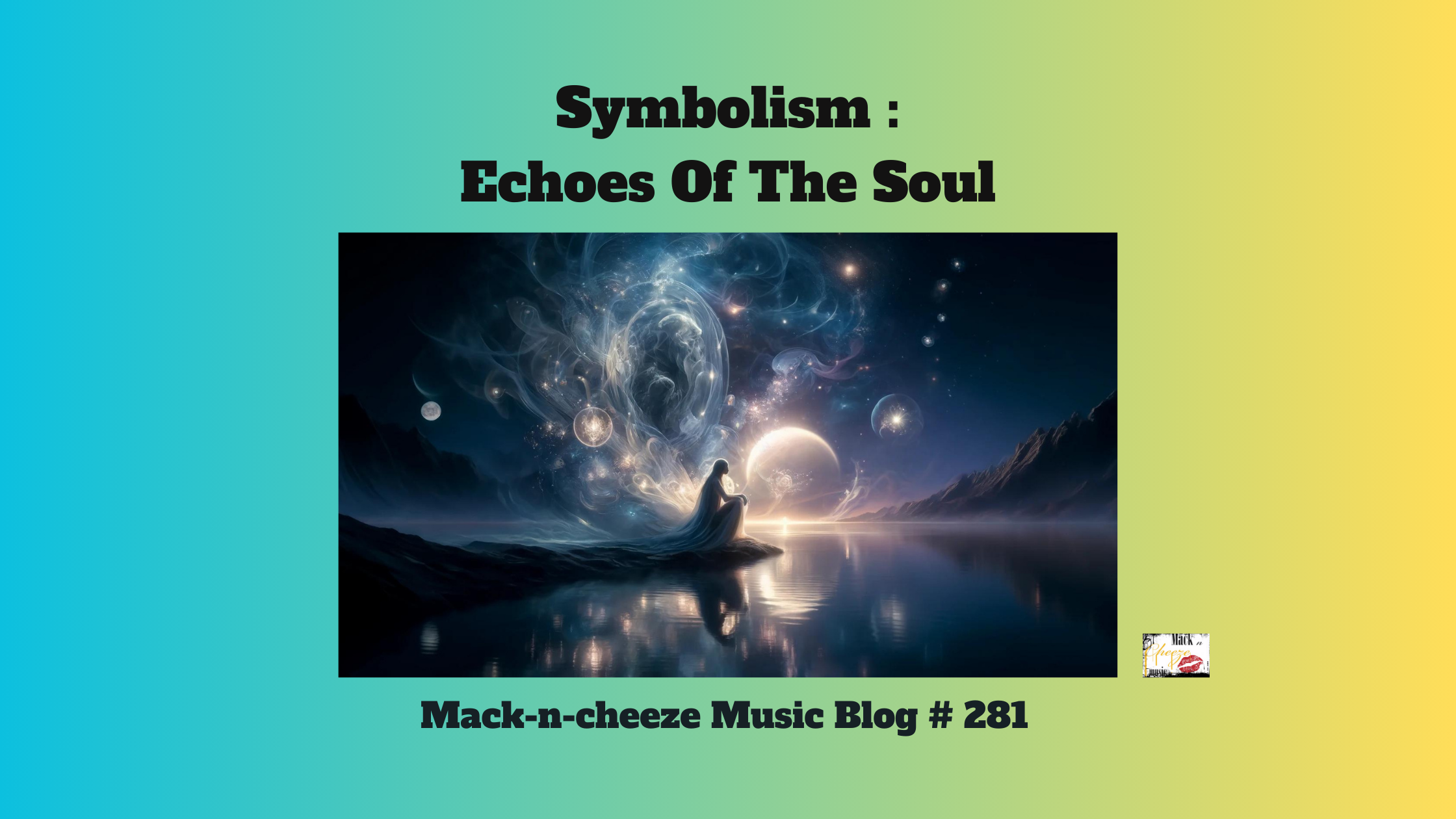
Symbolism is movement. Here, echoes shape meaning – no declarations. It captures whispers from the soul, crafted from what lies hidden. What is felt matters more than what is seen. Each piece, a brief, deep look into the unseen depths of life.
Estimated reading time: 9 minutes

Table Of Contents
Symbolism: Understanding Artistic Movements
Understanding different artistic movements is crucial. This has been essential to my understanding of the many art forms. There are several reasons for this:
Each artistic movement is a product of its time. All have emerged from specific historical, social, and cultural contexts. I gain insight by becoming familiar with these movements. Every individual transition has shaped the artists involved and, in turn, society. The catalysts can be diverse: political upheavals, technological and philosophical trends, and societal changes.
These forces help me understand the broader narrative. The hope is to enrich my appreciation of the art form.
Different artistic movements often pioneer unique techniques, styles, and perspectives. Exposing ourselves to varied methodologies can inspire innovation. This opens new avenues of experimentation; the goal is to develop our artistic voice.
Studying artistic movements involves analysis. What is the intent and message behind the creative canvases? Critical thinking allows one to engage with the genre.
Artistic movements often reflect the challenges from which they arise. Understanding cultural identities and historical periods fosters a broader empathy and awareness.
Many contemporary artists draw from or react against earlier movements. Understanding the lineage of artistic ideas can provide a rich source of inspiration.
Engaging with different artistic movements is about more than just learning history or appreciating art. It can also be a transformative journey of personal growth. Exploring art can encourage introspection, sparking reflection on one’s own experiences and emotions. The ultimate vision? Again, helping one develop one’s own artistic voice.
The Symbolist Movement

The Symbolist movement emerged in France in the late 19th century, around the 1880s. The Realist and Impressionistic movements favored straightforward representations of the natural world. Symbolists sought to convey the deeper meanings or emotions behind the physical world. They often explored themes of spirituality, imagination, and dreams.
Symbolism uses metaphor and suggestive styling in literature to evoke moods and ideas. This approach is evident in the works of poets like Arthur Rimbaud and Stéphane Mallarmé. They focused less on explicit narratives and more on nuances and ambiances that could stir deep emotional responses.
Symbolism shunned straightforward, literal descriptions and embraced more dreamlike, metaphorical subjects. Symbolist poems aimed to spark an emotion with a few evocative details.
In visual arts, Symbolist painters used mythological and dream-like imagery to express philosophical and often personal truths. Examples include artists like Odilon Redon, Gustave Moreau, and Fernand Khnopff. Their works were ethereal, and the emphasis was on mood and tone rather than precise realism.
The Symbolist movement significantly impacted later developments in art and literature. The genre laid the path for modernist explorations of abstraction and the subconscious. Like Impressionism, symbolism emerged from the dissatisfaction with traditional art forms. It was a reaction to the prevailing trends of realism and naturalism.
Symbolism arose from a desire to escape. The industrial age was marked by materialism and rationalism. The movement sought to explore the inner life, spirituality, and the unconscious.
Odilon Redon

Odilon Redon, a master of the intangible, was born in Bordeaux, France, in 1840. His early years were marked by solitude and introspection, which shaped his later works. Redon found his calling in the shadows and the unseen rather than the vibrant landscapes of his Impressionist contemporaries.
Redon would delve into the realms of fantasy and myth in his Paris studio, surrounded by the dim glow of lamplight. His charcoal “noirs” and later luminous pastels spoke of a world beyond the immediate perception. Creatures from dreams, fantastical beings, and enigmatic figures populated his canvases, each a whisper from the depths of his imagination.
Redon’s work, often eschewing the conventional beauty of realistic art, instead embraced the mysterious and the metaphysical. His canvases were populated by creatures from dreams, fantastical beings, and enigmatic figures, each one a whisper from the depths of his imagination. In Redon’s universe, the line between the real and the surreal was blurred, creating a bridge to the subconscious.
Redon’s artistic journey was a testament to his belief in the power of the unseen and the potential of the mind to transcend the ordinary. His legacy, firmly rooted in his ability to evoke the ineffable and render visible the invisible realms of the psyche, positions him as a pivotal figure in the Symbolist movement. His influence can be traced in the works of later artists who strive to explore the symbiosis between the visible world and that which lies just beyond our grasp.
Origins and Influences
Symbolism resonated across Europe. It touched the hearts and minds of those yearning to explore beyond the visible. The movement was driven by intellectual currents and earlier artistic movements. Symbolism represents our core values at Mackncheeze Music: emotion, individualism, and pursuing deeper meanings. These are what fueled it.
Romanticism
Symbolism evolved from Romanticism. The style was key, with an intense focus on emotion and individual expression. It was meant to veer away from grand heroic narratives and delve into more mystical and introspective themes. The analogue is akin to an artist’s journey. Exploring the depths of the soul through music and art is the expression. Symbolism sought to delve into what lies beyond the surface.
The Decadent Movement
The Decadent movement acted as a catalyst for Symbolism. The Decadents emphasized aestheticism. They voiced disdain for mundane naturalistic depiction. These artists reveled in themes of decadence and decay. These were powerful metaphors for the psychological exploration. It was about peeling back layers to reveal the raw, often overlooked parts of life and art.
Spiritual and Philosophical Influences
Symbolism was also influenced by the burgeoning interest in metaphysical ideas, including Eastern philosophies, the occult, and spiritualism. These influences encouraged a departure from traditional Western conceptions of reality and art. Symbolism invited artists to push boundaries to explore the unknown. Many dared to probe the darker recesses of the human psyche.
Arthur Rimbaud

Arthur Rimbaud, the enfant terrible of French literature, made an indelible mark on the late 19th-century poetry scene. Born in 1854 in the quaint town of Charleville, France, Rimbaud’s literary journey began at an astonishingly young age. His early writings, a testament to his prodigious and revolutionary talent, would forever change the course of modern poetry.
As a teenager, Rimbaud penned some of his most audacious and avant-garde poetry, such as his seminal works Le Bateau ivre (The Drunken Boat) and Une Saison en Enfer (A Season in Hell). His writing was a vibrant, chaotic journey through visionary landscapes, mingling dreams with reality and the profound depths of the subconscious mind.
Rimbaud’s life was as tumultuous as his verse. At sixteen, he ventured into the bohemian circles of Paris, striking up a notorious and volatile relationship with the poet Paul Verlaine. Their union, fraught with passion and discord, would lead to a brief, fervent period of creativity and ultimately to disaster – culminating in Verlaine shooting Rimbaud during a heated argument.
Despite his short-lived career, effectively ceasing his literary output by the age of twenty, Rimbaud’s influence was far-reaching. His exploration of the subconscious and his groundbreaking theory of ‘derangement of all senses’ as a path to poetic enlightenment challenged the traditional boundaries of poetry. His ideas paved the way for future literary movements, notably Surrealism, leaving an enduring mark on the world of poetry.
Rimbaud’s legacy is one of relentless pursuit of the unknown, a quest to capture the ineffable experiences of life through words. His poetry continues to haunt and inspire, a testament to his belief in the transformative power of the imagination.
Redefining Art and Literature
Symbolism redefined artistic expression. It insisted that art must represent absolute truths, which could be indirectly described only. Symbolists expressed complex emotions and states of mind through imagery and indirect suggestion. These elements were used to convey subtle depth. This approach contrasted with the direct observational style of Realism and Impressionism.
Symbolist writers used evocative and often ambiguous metaphors. They focused on feelings evoked by objects, events, or states rather than direct representation. They believed that art should reflect an emotion or idea rather than depict external reality.
Symbolist painters emphasized dream-like and visionary scenes. These vistas seemed to exist between the real world and a mystical or imaginary realm. Their work was often characterized by a static or somber mood and a preference for muted color palettes.
Legacy
Symbolism changed modern art and literature deeply. It led to movements like Surrealism and Expressionism that delved into the unconscious and dreams. Symbolism’s focus on subjective world interpretation set the stage for modernist experiments, influencing stream-of-consciousness in literature and abstract expressionism in painting.
Can We Help You?

Thank you for taking the time to explore the intricate world of Symbolism with us. Your engagement and curiosity drive us to delve deeper and share more about the fascinating movements that have shaped artistic expression throughout history.
We would love to hear your thoughts and interpretations of Symbolism. Do you see echoes of these timeless themes in today’s art and culture? Please leave a comment below to share your insights and continue this enriching conversation. Your perspectives enrich our community and deepen our collective understanding.
If you found this exploration enlightening, please consider sharing this post with friends or on your social media. By spreading the word, you help cultivate a broader appreciation for the profound influences that historic artistic movements have on our current creative environment.
Finally, to stay updated with our latest posts and dive deeper into the world of art and music, please subscribe to our blog. Join our community of passionate creators and art enthusiasts who are committed to exploring the depths of artistic expression and its impact on our lives and society. Your subscription not only keeps you informed but also supports our mission to enlighten and inspire through the power of art.
Want More Mack-n-Cheeze?
Videos - Bryan At Mackncheeze on YouTube
Podcasts – Bryan At Mackncheeze Apple Podcasts, Fountain, Spotify
Leave a Reply