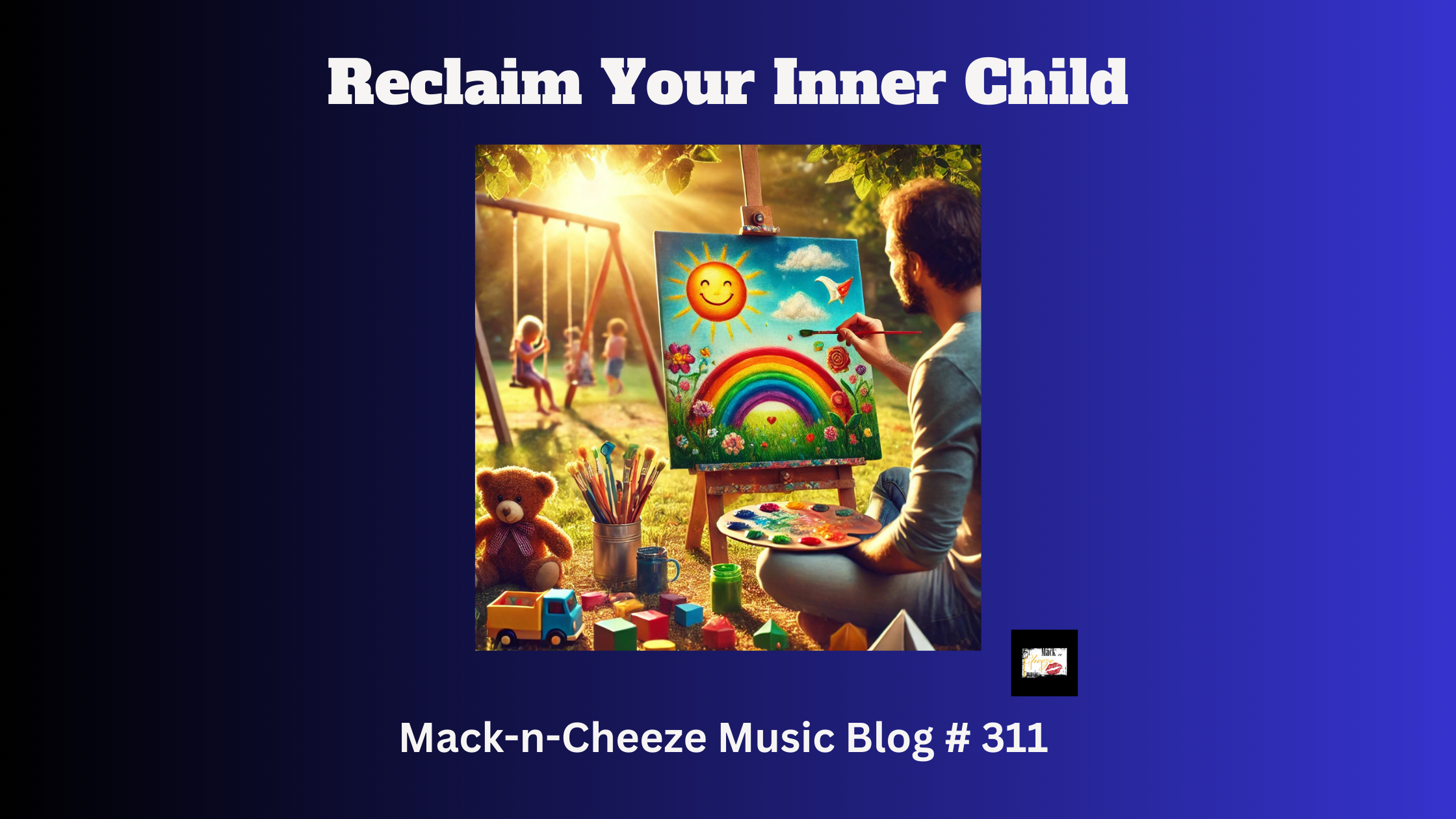
Do you want to reclaim your inner child?
Have you ever seen a child sitting alone? And were they talking to someone only they could see? Their companion wasn’t real, or were they? It wasn’t just play. It was pure creation.
Estimated reading time: 13 minutes

Do you remember having companions no one else could see? Did you create worlds that never existed?
I am trying to remember my companions, but I sure remember the worlds.
Now, the reality of life presses in, heavy with rules and logic. That spark of creation fades, buried under practicality.
Do you want that spark back? I do. What if you could find that freedom of creativity again? Imagine what you’d make. How you’d face the impossible. Life, stripped of limits, could be something more than it already is.
I want to find and use that lost piece to shape my world anew. How about you?
Table of contents
Building Worlds One Piece At A Time
My brother and I were latch-key kids. Mom and Dad worked hard to keep a roof over our heads, leaving us to our own devices after school. We didn’t mind. Most days, we’d dump out our thousands of Legos, spreading them across the living room floor. That was the start of something bigger.
We weren’t just building; we were adventuring. Vikings clashed with knights. Army men defended Lincoln Log forts. Lego pieces turned into castles, spaceships, or cities. There were no limits, no iPads needed. Our minds were enough, creating worlds that had never been. The rules? We made up our own rules as we went along, deciding what was and was not allowed.
When Mom got home, the spell was broken. We’d scramble to clean up, shoving Legos back into boxes. Yet somehow, there were always a few strays. We scoured the deep shag carpet for errant pieces. But we always missed some. And, of course, Mom was irritated. But even her mutterings couldn’t erase the magic of those afternoons.
When we played like that, there were no boundaries. We argued, we agreed. Roles shifted, the game grew. It wasn’t just play. There was something more. We cooperated and created. The first lessons in how to build a world, one tiny piece at a time.
Keith Sawyer sees this. In Group Genius, he shows how this kind of play shapes minds. It teaches children to think, to adapt, to work together. It’s the seed of creativity, planted in the chaos of childhood games.
Reclaiming The Creativity We Were Taught To Lose

As we age, something shifts. The wild creativity of childhood fades. The stick is no longer a sword, and the box is no longer a spaceship. Rules creep in. Expectations take hold. The need to fit in wraps tight around us.
Why does this happen? What snuffs out that spark? George Land, a researcher, looked for answers. In 1968, he tested 1,600 children using a NASA creativity test. The results were clear. At age five, 98% scored as creative geniuses.
Then, the years passed. By age 10, only 30% still had that spark. By age 15, just 12%. Adults? A mere 2% kept their genius.
Land’s research showed the truth. Creativity doesn’t die independently; it’s taught out of us. Schools teach rules. Society teaches fear. We learn to stay inside the lines, to follow the path. What was once a wild playground becomes a pruned garden. Safe, predictable, and small.
But Land left us with a challenge. If we learn to suppress creativity, we can learn to free it again. Reclaim the curiosity. Take risks. Build worlds again. The question is not if we’ve lost it. The question is if we’re willing to fight to bring it back.
And Then There’s Pablo
Pablo Picasso remarked, “It took me four years to paint like Raphael, but a lifetime to paint like a child.” Picasso believed in the importance of unlearning conventional techniques to embrace the uninhibited creativity of childhood.
Every child is an artist. The problem is how to remain an artist once they grow up.
Picasso viewed that true artistic expression required shedding learned constraints to recapture the imaginative freedom of youth.
Why We Lose Inherit Creative Genius

Schools teach you to find the right answer. Fill in the blanks. Follow the rules. Success means fitting in, staying on the path, and doing what’s expected. Creativity takes a backseat.
Tests ask for one answer. Color inside the lines. Copy the method that works. Mistakes aren’t lessons; they’re failures. The fear of being wrong grows. The urge to try something new shrinks.
Society doubles down. Get the job, the house, the promotion. Follow the script. Don’t ask questions. Don’t stray. The messy work of ideas, the risks, and the leaps get pushed aside.
But creativity doesn’t follow rules. It lives in the unknown, in bending what’s fixed, in chasing what’s not clear. It’s the spark that starts it all. Rules can shape it, but they can’t cage it. To create, you need both discipline and freedom. But never let the rules hold the pen.
Reclaim Lost Sparks Of Pure Imagination
Think back to school. In my generation, the first two grades were spent learning fundamentals. Reading, writing, addition and subtraction. There weren’t grades. Instead, if my efforts were substandard, I got the frowny face.
If you can’t make the cut, no gold star for you. You learn quick. Break the rules, get the frown.
The grading system showed up the third year. Cursive writing was my bane. No wonder block printing is still my favorite.
Essays came next. Five paragraphs. Three examples. No more, no less. You had a wild idea, but it didn’t fit. You crammed it in, forcing it to work. It lost its fire, neat but lifeless.
The rules were everywhere. No chewing gum in class. Keep your desk organized. Keep your hands on top of your desk.
Raise your hand before you speak. Your thought, sharp and fresh, had to wait its turn. Most times, it faded before you could say it.
Then there were group projects. Someone always took over. Someone else did the work. Another coasted by. The game was straightforward: don’t stand out, don’t upset the balance. Creativity stayed silent.
Those moments taught us one thing. Stay in line. Follow the plan. Don’t color outside the box. It worked – for them. For us, it cost something. The wild ideas, the crazy sparks, got locked away.
But think about the times the rules didn’t matter. The playground games you made up. The doodles that filled the notebook margins. That was the magic. That was real. The challenge now is simple. Go back there. Break the rules. Find the lines and cross them.
Your Divergent Mind: Think Like A Kid Again

Divergent thinking involves generating multiple ideas for a problem in a short amount of time. The thought process is also known as lateral thinking. It is akin to what children do.
Divergent thinking is spontaneous, not tied to a linear thinking process, and is free-flowing. The goal is to generate a profuse amount of alternate ideas. Often, there is more than one correct solution.
In the mastermind group I’m in, we integrate divergent thinking. Our conversations are all over the place. We are looking to garner insights into our projects. An idea often does not have a one-size-fits-all solution. There are many possible connections. The challenge is sorting out solutions. Consensus is not unanimous.
Children are natural divergent thinkers. Their imagination does not constrain them. Kids can conjure a variety of creative ideas. The younger the child is, the fewer restrictions there are on the thinking process. Outside-The-Box, Off The Beaten Path.
I want to experience how it felt again. Not to be more childish than I already am. But break the rules. Ask the same questions repeatedly. Come up with new ideas. Create, but not with preconceptions. I want to create as I dream.
Mistakes do not unnerve kids. Why do we stop asking why? They don’t. We fear being considered foolish. Children have no qualms. Judgment does not matter. The game is everything when the consequences are limited. How do we see around our perceived outcomes?
To think like kids again, we must let go of rigid rules. Play. Ask questions. Embrace failure. When we do, the world opens up. New ideas come. The limits fall away. We create as we dream. Ignore the doctrines and messages of others.
Paul Klee

Paul Klee was born in Switzerland in 1879. As a child, he played music and painted. Art won his focus. In Munich, he studied, struggled, and searched for his voice. Then, in 1914, Tunisia changed him. The light, the color, his eyes were opened. He began to see hues not as details but as emotion.
Klee joined Der Blaue Reiter, an Expressionist group, and later taught at the Bauhaus. There, he shaped new ways of thinking about art. He said art should reflect the unseen. The inner world. He valued intuition, creativity, and the pure vision of children.
His work danced between abstraction and form. It was playful and thoughtful, full of symbols and patterns. In pieces like Senecio and Twittering Machine, you see this balance. There is whimsy with depth and simplicity with meaning.
Klee studied and appreciated children’s art, created free of models or previous examples. He painted like a child might. Often employing intense colors inspired by an early trip to North Africa.
In Klee’s writings, he discusses the child’s ability to see the world directly, unmediated. For instance, he wrote about how children’s drawings often reveal truths about form and motion that formal artistic training can obscure. These views align with the philosophy of the Bauhaus and his general reverence for the creative potential found in childhood.
Klee left behind more than paintings. He left ideas. His art, his writings, and his teachings remain. Quiet, enduring, and alive in every stroke.
The Daily Struggle
We are alike, you and I.
You wake up early, the only time the world is quiet enough to think. Carpe Diem, yeah, sure. You can pretend the day is yours; just pretend. Coffee in hand, your desk is waiting. You caress your instrument or snap open the laptop. The fire is there, and creative juices sizzle. But the clock always ticks louder. Work is waiting, emails are piling up, and meetings loom. Time isn’t yours for long.
The job pays the bills. You have to keep the household up and fund your projects. Working for the man is necessary, but where is the light. It’s the holding pattern, a place to stay stuck while art waits, restless in the background. Every hour spent on someone else’s agenda feels like a small loss, a missed opportunity to build the life you truly want.
Somehow, you carve out time to create. Frustration whispers in the background. The day’s noise lingers, making it hard to focus. The blank canvas stares back, silent and stubborn. The ideas are somewhere, but pulling them out feels like a fight. The day’s struggle is exhausting, and you’re unsure how much energy is left to give.
Reclaim Your Vision During Challenges
You have collaborated with others. But they have a different agenda. A different time frame. They don’t have the same vision and prioroties. You want focus, passion, and commitment, but you often carry their weight, fix mistakes, and readjust their input. Disheartened is not the word; describing emotions welling up inside you is impossible. But you keep going. What is the alternative?
As the day ends, you feel the gap between two worlds. Who you are and who you could be. Wide and daunting, but the dream of closing it is enough to keep moving. You tell yourself tomorrow will be different; there will be more time, focus, and progress. You’ll find the people you can work with. The hope doesn’t fade. It keeps you chasing the life you’re meant to live.
It’s Never Too Late To Play

Logic will get you from A to B. Imagination will take you everywhere.
—Einstein
This is a goal I have to keep reminding myself of every day: Ask myself, “What If?” Attack each moment with questions and each possible solution with awe. Look at each person with awe, problem, and opportunity with awe. Find the awe in every problem. What if today is part of the catalyst, or is the catalyst?
We’re going to make mistakes. Ever seen the “Flawed Human” t-shirt? That’s me. Flawed. Dumb decisions. Procrastination. Too slow to respond.
The only solution is to get Better.
Ask yourself “Why?” over and over again, like a kid. If you start to see the why, ask yourself, “How,” and “What,” and then “When?”
Try a stream-of-consciousness writing exercise. I have friends who practice that, and it works.
Play your instrument in a new way. Doodle in a notebook.
If you have young children, play with them and let them show you complete freedom of imagination. Take notes. Learn to unlearn from the experts, your progeny.
Reclaim The Spark And Begin Again
Do you still see them, those companions, those worlds? Maybe they’re not as removed as we think. Perhaps they’re just waiting, tucked behind all the noise and rules we’ve piled up over the years.
What if we let them back in? What if we set aside the logic, the shoulds, and the shouldn’ts, even for a little while? Maybe we’d see the spark flicker again. Maybe we’d remember how it felt to create freely, without fear or limits.
The world won’t stop pressing in, but that doesn’t mean we can’t push back with imagination, one small spark at a time. It’s never too late to shape a new world—one that feels a little more like the ones we used to dream. So, will you try? Will you listen for those voices again? I think I will.
Can We help You?
What one thing can we do for you? It’s why we’re here.

Thank you for taking the time to read and reflect with me here. I hope this post gave you some inspiration. If reaching for creativity is your thing, this will help connect with that latent inspiration. I’d love to hear your thoughts in the comments – your perspective enriches this conversation.
Please share this post if you feel someone else might benefit from reclaiming their inner child. Let’s spread the idea that freeing our minds from all these built-up preconceptions is a source of creativity.
And if you’d like to stay connected for more posts like this, please consider subscribing. Thanks again for reading.Want More Mack-n-Cheeze?
Videos - Bryan At Mackncheeze on YouTube
Podcasts – Bryan At Mackncheeze Apple Podcasts, Fountain, Spotify
Leave a Reply