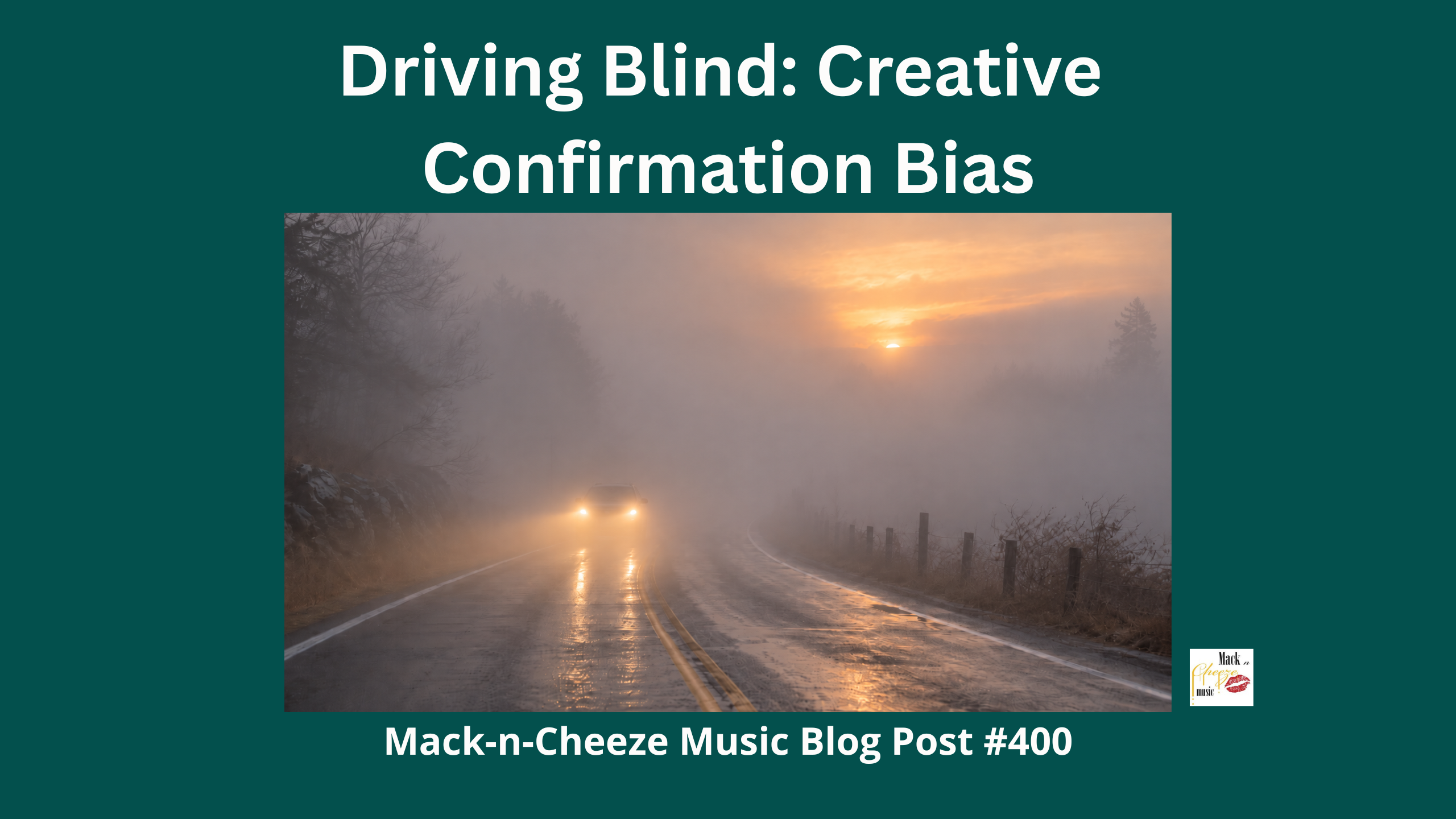
Confirmation bias can influence what we notice and what we choose to explain away.

One of my buddies had a grandmother whose car repeatedly came home with flat tires on the passenger side. The family assumed something was wrong with the car, but the mechanic found nothing.
Then the local police arrived at his father’s house.
She kept taking the car out as usual, while her failing eyesight remained her secret. She had found a way to continue driving without admitting how badly she was impaired. Using the curb to feel her way through her small hometown allowed her to navigate from memory. Because she kept making it home, the method appeared to work. The ruined tires were treated as a mechanical problem until the police discovered what was happening.
The family sees damaged tires and assumes structural failure. But Grandma has a solution to her problem without revealing her decline.
Both interpretations miss the larger problem.
Interpreting The Situation
Each trip that ended safely gave Grandma another reason to believe she could still drive. From her point of view, the method worked well enough to keep driving and maintain her freedom.
The family believed there was mechanical failure, unaware of Grandma’s growing disability.
When The Abnormal Becomes Normal

The same kind of reasoning can show up in situations far more serious than a family car.
But each time my friend’s grandmother drove her car, lives were endangered. She could have killed herself or someone else through the negligence of bad decisions.
NASA had been seeing O-ring erosion for years before the Challenger disaster. By 1985, engineers had seen it enough times to know it was not a fluke. But the shuttle kept flying despite growing evidence.
Sociologist Diane Vaughan later called this the normalization of deviance. When something goes wrong often enough without ending in disaster, people can start treating it as normal.
In both cases, the warning was present before the failure was fully understood.
Living Around The Problem
This pattern is not limited to engineering or creativity. People can adjust to recurring problems so gradually that the adjustment becomes part of daily life.
A person can refinance debt, feel the immediate pressure ease, and continue the same spending habits that created the problem. The relief is real, but nothing underneath has changed.
A person dealing with addiction challenges may keep putting off resolving the circumstances. If nothing has forced change, why change?
The immediate problem gets handled, so life keeps moving. After a while, the damage starts to feel normal simply because it has become familiar.
Misreading The Problem

Creators can misread the problem just as easily. A musician may keep changing the mix because the song is not getting a response. A writer may move the same work from one platform to another and assume the audience is the problem.
Once a creator becomes convinced they know what is wrong, new evidence can get bent around that belief.
And once we decide what the problem is, we can spend a lot of time fixing the wrong thing.
Drawing The Line
By the time Challenger sat on the launch pad, seven astronauts had spent years preparing for that flight. Their families expected them home. NASA had also spent years and public money getting the mission ready.
The O-ring warnings were already part of the record, yet the launch went ahead. The concerns had not gone away, but the process went on anyway.
Creative work asks for belief, and sometimes that is all we have. But belief can make evidence harder to recognize. A strategy can keep failing while the creator keeps defending it because so much has already been invested in making it work.
The question is not whether to quit when things get hard. It’s not easy what we do. The question is whether we keep reading the same evidence in a way that protects what we already believe.
At that point, persistence may no longer be serving the work. It may be protecting the story we have chosen to believe about it.
Can We Help You?
What evidence are you explaining away because it challenges what you already believe about your creative work?

If this made you question something you have been explaining away, leave a comment.
Share it with someone who may need a second look at what they believe is working.
And subscribe for more from Mack-n-Cheeze Music.

Thanks for reading, and for staying willing to question the story you tell yourself.
Continue The Journey
Because sometimes the wisest person in the studio has four paws.

Want More Mack-n-Cheeze?
Videos - Bryan At Mackncheeze on YouTube
Podcasts – Bryan At Mackncheeze Apple Podcasts, Fountain, Spotify