Everything’s Been Done Before
Estimated reading time: 10 minutes

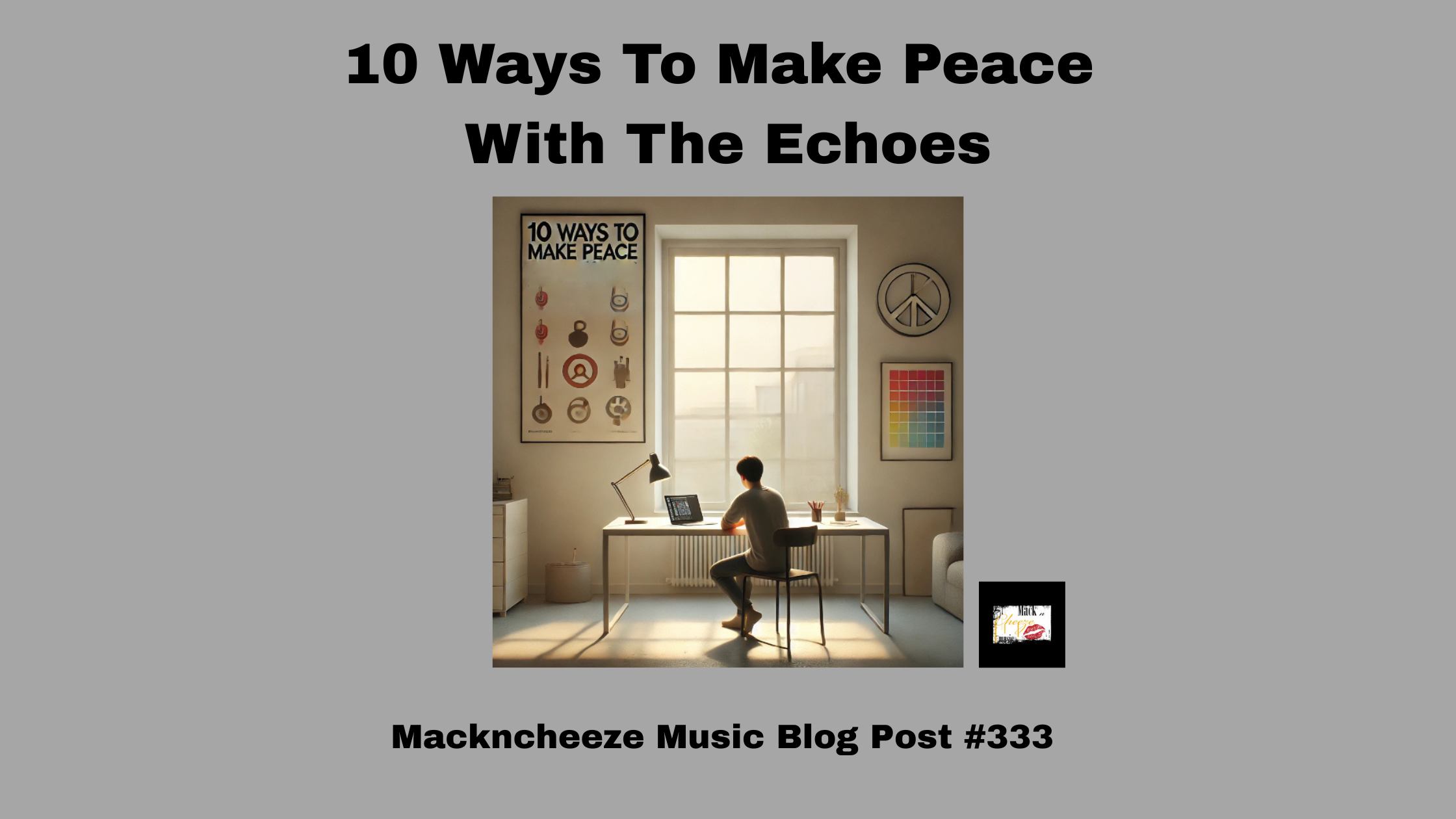
Image generated by Dalle
The echoes manifest before you even begin. Blank page. Blinking cursor.
The emptiness in your gut and the vacuum in your head.
You strum the chord. It rings with déjà vu.
You write the line. It feels stolen.
You chase the melody, but it’s already been sung. Was it Neil Diamond or Funkadelic? Whoever sang it was better, better, decades ago.
Footsteps behind you: Homer, Shakespeare, Nina Simone, your old demo from 2013.
Shadows trail your hand through brushstrokes, chord changes, and blinking cursors.
They are left unsaid to you. They crowd you out. How are we going to measure up?
You pause, stare, and doubt; maybe you are noise, white noise in the cacophonous maelstrom of the 21st century.
But something rattles you.
You reach again, grasping the clay with pressure and purpose.
You have the same themes and tools as those in the past but with different hands. Your hands.
The Echoes Through The Ages
Before you call your creative block a modern problem, know this: artists have been here before. Long before laptops, loops, or livestreams, they were already questioning whether anything left was worth saying.
Ancient Egyptians Were Already Complaining
Khakheperresenb was an Egyptian scribe and priest who was likely active during the Middle Kingdom, around 1900 BCE, possibly under the reign of Senusret II or III.
He is known only from a single surviving text:
“The Complaints of Khakheperresenb” is written on a wooden writing board now housed in the British Museum.
The fragmentary text captures one of the earliest recorded artistic frustrations, lamenting that language has grown stale and the truth is obscured. Sound familiar?
King Solomon Nailed It
“There is nothing new under the sun.”
Written in Ecclesiastes around 3000 years ago, consider it divine wisdom.
It is discouraging, is it not? It is blunt and painfully accurate. We would really like to be the original, latest, and greatest. That rarely happens. Reality can be a bummer.
The Greeks Had It Figured Out
Long before pens scratched parchment, these stories were passed by voice from firepit to battlefield.
Homer, who is credited with writing The Iliad and The Odyssey around the 8th century BCE, did not create the epics from scratch. The generations before him were already familiar with the stories. His sagas weren’t inventions; they were burned into history.
The hero’s journey? Odysseus defined it.
Forbidden love? Helen of Troy lit that match.
Vengeance, fate, gods, pride, death, and rebirth were there 2,800 years ago.
These are the blueprints we still use as our foundation for creative stuff.
Every modern story that moves you?
Homer workshopped it first.
The Echoes

Image generated by Dalle
Shakespeare didn’t invent drama; he just added rhythm. Salinger didn’t create the novel; what he wrote had impact. The tools were already sitting there, waiting. There was no need to reinvent the medium. They used what was available and made it theirs using the echoes of the past.
Shakespeare Did It Better
Shakespeare wasn’t chasing originality; he only did remixes.
Greek myths, Roman histories, Old English folktales, and Italian novellas. Half of his plays were derivative, with better dialogue and more bodies on the floor. Will knew his audience; just like today, obligatory violence sells. This, too, is not new.
Romeo and Juliet? Lifted from a 1562 poem.
Hamlet? Based on a Norse legend already making the rounds.
Julius Caesar? Straight out of Plutarch.
He didn’t invent the stories.
He added his panache and made them unforgettable, with rhythm, blood, and truth that still hits 400 years later.
Originality wasn’t the point.
It was execution.
Harold Bloom: Wrestling With The Echoes Of The Past
Harold Bloom (1930–2019) was a prominent American literary critic and Yale professor. In his 1973 book The Anxiety of Influence, he argued that poets—and all artists—don’t create in a vacuum. They struggle with the work of those who came before them.
Bloom believed that great artists feel pressure from their predecessors and must “misread” or twist what came before to make something their own. He compared it to a son trying to outdo his father. A creative fight for independence.
For Bloom, originality isn’t about starting from scratch. It’s about wrestling with the past until your own voice breaks through.
“Poetic influence… is an anxiety-producing act of misreading one’s predecessors.”
— The Anxiety of Influence: A Theory of Poetry (1973)
Pop Music Proves It
Three chords or four. All your life, it is what you have been listening to.
Most modern pop? I–V–vi–IV. That’s the magic loop. Think Adele, Taylor Swift, almost every hit since the ‘60s. Don’t take my word for it. Axis of Awesome turned it into a punchline.
And if you rewind further, blues kept it even simpler: I–IV–V. That’s the backbone of rock, soul, country, and everything that sways a bar crowd.
It’s not about the chords.
It’s what you do with them.
The Lilith Fair blew open the doors for female singer-songwriters in the late ’90s. Sarah McLachlan, Joan Osborne, Sheryl Crow, and a whole wave of artists who brought raw honesty to the stage. One thing that tied many of their songs together was a go-to chord progression that nailed the vibe. Introspective, emotional, and unmistakably female, or so they say.

Image generated by GeniGPT
This progression, known as the vi–IV–I–V sequence, was dubbed the “Sensitive Female Chord Progression” by Boston Globe columnist Marc Hirsh. In the key of C major, this translates to Am–F–C–G. Hirsh first identified this pattern in Joan Osborne’s “One of Us” and noted its widespread use among Lilith Fair artists.
Everything Is a Remix
Kirby Ferguson, a filmmaker and cultural critic, spelled it out in his brilliant doc series Everything Is a Remix. His point? Art isn’t born from lightning bolts. It’s built by copying, transforming, and combining what’s already there.
Waiting around for pure originality? You’ll be waiting forever.
Start remixing. That’s where the real work begins.
The Echoes Of History
You are not genetically wired to find the perfect art form. Your DNA doesn’t care if you’re a filmmaker, a poet, or someone tinkering with AI; it likely wants to ensure you eat and don’t fall off a cliff.
From cavemen smearing pigment on cave walls to artists carving stone to writers banging out words on typewriters to whoever’s building the next thing in a lab, people don’t start with a calling. They begin with curiosity. You don’t wait for the perfect tool. You work with what’s in front of you. Half the time, it’s in the clearance bin. You make the resources at hand matter. That’s the game. It’s all been done before.
The Internet Eats Novelty For Breakfast
We handed the machines our entire creative history. Every sketch, song, and sentence, and now they spit it back faster than we can blink. That new idea you were proud of? Midjourney probably puked out a dozen versions of it yesterday while you were still tuning your guitar.
Want to know what Midjourney is? It is an AI-powered image generation tool that creates detailed, stylized visuals based on text prompts. You type a description, and it turns your words into a digital image, everything from photo-realistic portraits to surreal dreamscapes.
Have you ever fed the same prompts to various AIs? I’m perplexed by how they all think the same, if you can call it thinking. Their outputs are obnoxiously similar. Shouldn’t that tell you something?
AI doesn’t create. It predicts and runs on machine learning, which means it digests oceans of existing work and rearranges the patterns it finds. It is not tapping into divine inspiration; it is puking out what has already been made, faster and questioningly slicked out with no coffee break.
There’s no soul, struggle, late nights, or risk. AI has not put everything on the line like many of us.
It can not create, but rather, it compresses. And yeah, it’s impressive. But don’t confuse novelty with originality.
This is how I see AI: AI is not a creative partner but a reflection, a mirror of everyone else’s ideas.
That’s why our job is not to beat the machine.
The one thing it can not replicate is being human.
Humans Are Still Human

Image generated by GeniGPT
Give up thinking you are inventing something brand new.
We don’t create fresh emotions out of thin air. Recycling is our modus opprerendi. We all have the same fears, hopes, heartbreaks, rage, wonder, and joy. It is who we are, and it has been that way for as long as we have been around. The worthy and the evil.
Love and death have not changed. Neither have longing, pride, jealousy, or the ache to mean something before the lights go out.
There is no such thing as new feelings.
As artists, we are here to say them in our voices. To twist them into our phrasing, groove, and fingerprints. That’s the job. Own it.
Here is the idea:
Be the one who connects people and ideas; expect the world to take notice. Use the echoes of the past to your advantage.
In a time when everything’s speeding toward cheap, fast, and forgettable, following the algorithmic path guarantees you’ll get lost in the noise. The only real move? Aim higher. Always race to the top.
Be the one who is fired up even after the day job. Lean into your creative impulses. Labor like it is urgent because it is.
Excited, hungry, and expectant, that focus changes the space around you. Pull people in and build momentum.
Your posture and the energy you generate signals everything. If you want your moment to show up, show you are resolved here and now.
Lean in. Be the spark. That’s where the shift happens. Let the echoes of the past fuel your next leap.
Can We Help You?
Are you surrounding yourself with people who fuel your creativity?

If you made it this far, thank you. Seriously, I write this for people who are still pushing, still creating, and still trying to find their way through the noise.
If this resonates, drop a comment. Share it with someone you know is wrestling with the same echoes. And if you want more fuel for the fire—subscribe. I’ve got more coming.
Want More Mack-n-Cheeze?
Videos - Bryan At Mackncheeze on YouTube
Podcasts – Bryan At Mackncheeze Apple Podcasts, Fountain, Spotify