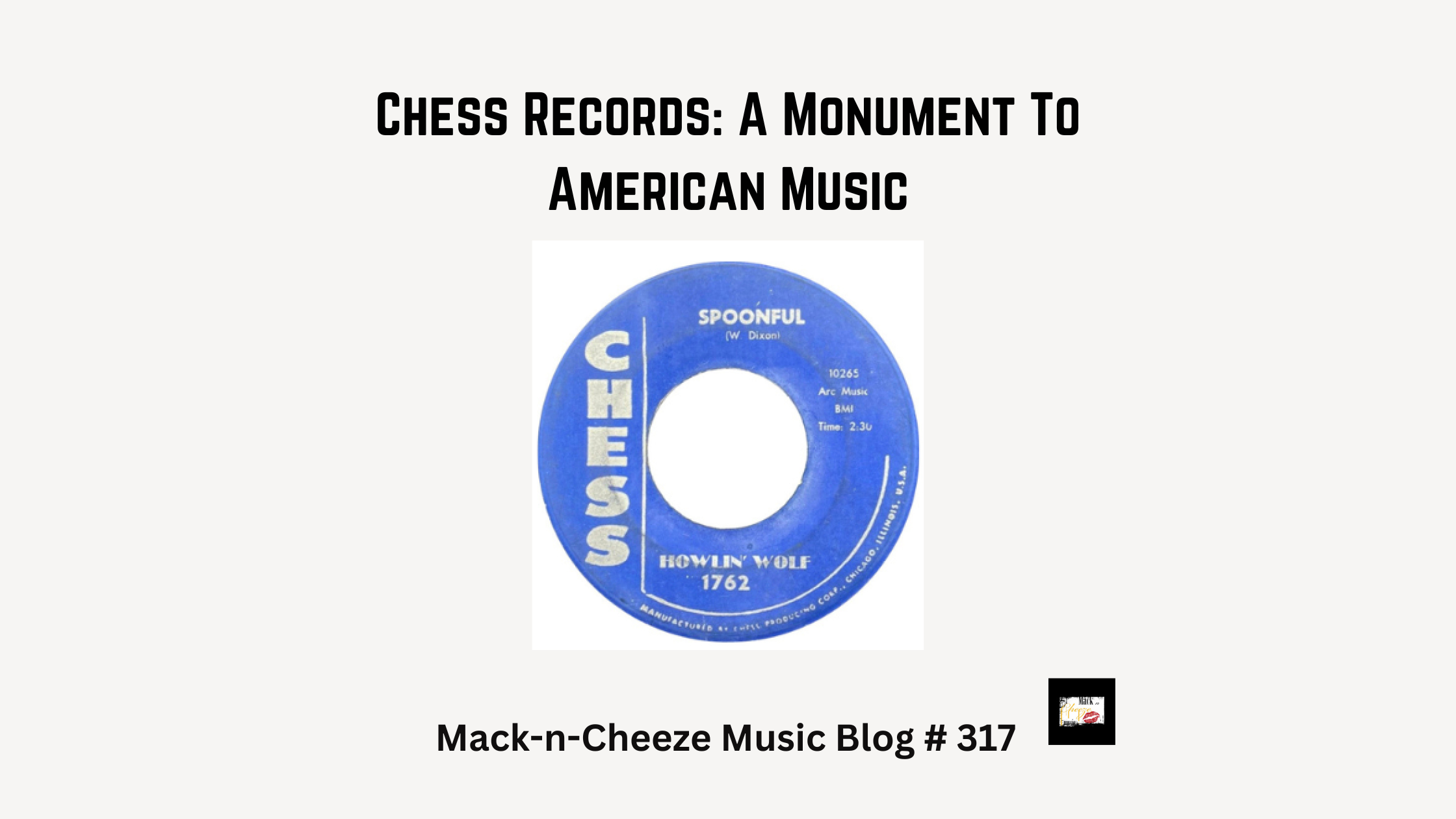
When we talk about the great legacies of the American music industry, Chess Records stands as a monumental chapter in that story. Founded in Chicago by Leonard and Phil Chess, this iconic label became a cornerstone of the blues, the driving force behind rock ‘n’ roll, and a cornerstone for soul and modern music genres.
Estimated reading time: 9 minutes

Chess Records Image courtesy of wikicommons
Table Of Contents
Why is the history of Chess Records so vital? My take: Chess Records is a convergence of art, innovation, and cultural transformation, which resonates with my goals as a musician.
How The Great Migration Shaped Chess Records

Image created by naif X
They left the South by the millions, Farmers, laborers, and families, packing what could be carried. They stepped onto trains and buses, some in silence, others exchanging quiet words of resolve. Some traveled alone, clutching small bags that held all they owned, while others leaned on the presence of family or friends. They did not know exactly what awaited them at the journey’s end but understood with absolute certainty what was behind them.
The fields no longer needed them. Machines took over, and the landowners pushed them out. Sharecropping wasn’t a life; it was a trap. The South gave them poverty, fear, and the weight of Jim Crow laws. Freedom was a word, not a fact.
In the North, the factories called. Chicago, Detroit, New York. Places where a man’s hands could earn more than empty promises. Black newspapers spoke of jobs and better pay. The promise of a life where their children could learn and walk with dignity.
The Great Migration reshaped the cities. Black communities became strongholds of culture and resilience. They voted, joined unions, and demanded more. But the North wasn’t free of prejudice. Racism lived in redlines and closed doors, crowded neighborhoods, and simmering tensions. The Chicago Race Riot of 1919 proved that the fight wasn’t over.
A second wave came with World War II. More families headed west toward Los Angeles and Oakland. War industries needed workers, and the dream of a better life was called again. By then, the music, art, and writing of Black communities had reshaped America: the Harlem Renaissance, Chicago blues, gospel choirs, and jazz bands.
The Great Migration was about survival and building something better in a world that refused to give it freely. Millions of lives were uprooted, and millions of lives were rebuilt.
Electrifying The Blues

Image created by naif X
In Chicago’s South Side, they built something new. Tight-knit neighborhoods rose. Churches, schools, and businesses gave them roots. The blues followed them. The music grew louder, faster. Delta songs turned electric in Chicago, filling clubs and street corners. Muddy Waters, Howlin’ Wolf, men who sang the truth of what had been seen and where they had been.
The South Side was filled with music. Nightclubs and dance halls crowded the streets, and the Sunset Café, Savoy Ballroom, and Dreamland Café gave musicians a stage and a crowd. The songs were raw, full of pain and joy, and loud enough to carry over the city’s noise.
Record companies like Paramount and Okeh captured the sound. “Race records,” they called them, sold across the country. Ma Rainey, Bessie Smith, and Blind Lemon Jefferson brought the blues to every corner. The recordings told the stories of Black life, reaching far beyond Chicago. Their songs carried the weight of the city and the people who lived there.
The Blues morphed in Chicago. The acoustic guitars of the South couldn’t cut through the noise, but the electric guitar could. Amplified harmonicas and tight rhythm sections made the sound stronger and sharper, and the blues became something new.
The Birth Of Chess
Immigrants, both Black and white, were drawn to Chicago, lured by its promise of a more liberal atmosphere and the hope of a better life. Leonard and Phil Chess, born Lejzor and Fiszel Czyż, were Polish-Jewish visionaries who carried their dreams across the Atlantic to America. With their names Americanized and their ambitions ignited, they settled in Chicago.
In the late 1930s, the Chess brothers entered Chicago’s thriving nightclub scene. By the mid-1940s, they owned and operated a nightclub called The Macomba Lounge on the South Side of Chicago. The club catered to an African-American clientele and featured live music, particularly jazz and jump blues.
The Macomba Lounge exposed the Chess brothers to the electrified blues sound emerging from the Delta blues tradition. They noticed how this new, amplified style resonated with the club’s patrons, who were drawn to its energy and emotional intensity. This experience would lay the foundation for their future ventures in the music industry.
Aristocrat Records
Aristocrat Records began in April 1947, launched by Charles and Evelyn Aron, along with Fred and Mildred Brount and Art Spiegel. By September, Leonard Chess joined the venture as an investor. Over time, he bought out the other partners, and by 1948, he and Evelyn Aron were running the label. In early 1950, Leonard brought his brother Phil into the business, and together they took full ownership. By June, the company became Chess Records, and the Aristocrat name was retired in January 1951.
In its short lifespan, Aristocrat released 183 songs and recorded 18 more, which were later issued under the Chess label.
Muddy Waters recorded his first tracks for Aristocrat on August 27, 1947. With Ernest “Big” Crawford on bass and Sunnyland Slim on piano, the session produced “Gypsy Woman” and “Little Anna Mae.” A follow-up session that December brought “I Can’t Be Satisfied” and “Feel Like Goin’ Home,” the latter becoming a modest hit and signaling the start of a legendary career.
The Sound That Changed the World

Image created by naif X
Chess Records’ story is one of vision, risk, and an unrelenting commitment to the raw power of music. What started as a small label run by two Polish-Jewish brothers, Leonard and Phil Chess, would go on to redefine blues, birth rock ‘n’ roll, and influence generations of artists worldwide.
In the early 1950s, Chess Records carved out its place in the music industry. By amplifying and electrifying the Delta blues, they stamped out an identity as no one before them.
Pioneering artists like Muddy Waters, Howlin’ Wolf growling like thunder, and Little Walter’s harmonica cutting like a knife. Sonny Boy Williamson told stories that were gritty and authentic. They all walked through Chess’s doors. The music never left. Willie Dixon, an essential architect of the label, was more than a bassist – he was a songwriter, arranger, and producer, crafting some of the most iconic blues tracks, including I’m Your Hoochie Coochie Man and Spoonful. These songs became the blueprint for rock ‘n’ roll.
By the mid-1950s, Chess Records had already made its mark on blues, but its impact was about to grow even more significant. In 1955, a young guitarist named Chuck Berry released Maybellene, a fiery blend of blues and country that exploded onto the charts. His music was unlike anything before—fast, youthful, rebellious. Chess Records had become a rock ‘n’ roll powerhouse. Bo Diddley followed with his signature rhythm, a pounding, syncopated beat that would influence generations of musicians. Hits like Bo Diddley and Who Do You Love blurred the lines between blues, rock, and R&B, proving that Chess was more than a blues label—it was a cultural force.
More Than Music: Chess Records’ Cultural Impact
As Chess expanded, it embraced new genres. In 1960, Etta James signed with the label, bringing a raw emotional power that added a new dimension to its sound. Her iconic songs, At Last, All I Could Do Was Cry, and I’d Rather Go Blind, cemented her as one of the greatest voices in music.
Meanwhile, Chess continued to diversify its lineup. The Moonglows sang in tight harmonies. Fontella Bass belted out soul that cut to the bone. Ramsey Lewis’s playing was so articulate that his piano practically sang.
In 1957, the Chess brothers purchased the building at 2120 South Michigan Avenue and transformed it into a world-class recording studio. This unassuming building became a mecca for musicians. It was here that Willie Dixon helped produce some of Chess’s most unforgettable records, and where visiting British rock acts, most famously The Rolling Stones, came to pay homage to their musical heroes. The Stones were so inspired that they recorded an instrumental titled 2120 South Michigan Avenue in tribute.
The Civil Rights Movement grew, and so did the music of Chess Records. The sound spread. Across the ocean, British bands listened. Clapton. Zeppelin. They took the blues and made it their own. Chess had built a bridge.
Transition
But the world was changing. Motown ruled the charts, and soul turned to funk. Chess tried to keep up but started to lag. Then, Leonard Chess died. The brothers sold the label. The doors stayed open for a few more years, but their soul disappeared. By 1975, Chess Records was history.
Today, Chess Records remains a pillar of American music history. Its songs continue to be celebrated, sampled and studied. The raw, electric energy that fueled its rise still echoes in today’s music. Leonard and Phil Chess may have been businessmen, but what they built was far more significant than a record label. They created a revolution.
Can We Help You?
How can we help you channel the spirit of Chess Records, its fearless creativity, innovation, and perseverance, into your work? Let’s start that conversation.

Thanks for reading this post.
Share your thoughts. We would love to hear about your experiences with Blues Music. If we hit a chord here, please share the post with someone who can relate. If you haven’t yet, please subscribe; there is a ton more in the pipeline.
Thank You Again!!!
Want More Mack-n-Cheeze?
Videos - Bryan At Mackncheeze on YouTube
Podcasts – Bryan At Mackncheeze Apple Podcasts, Fountain, Spotify
Leave a Reply