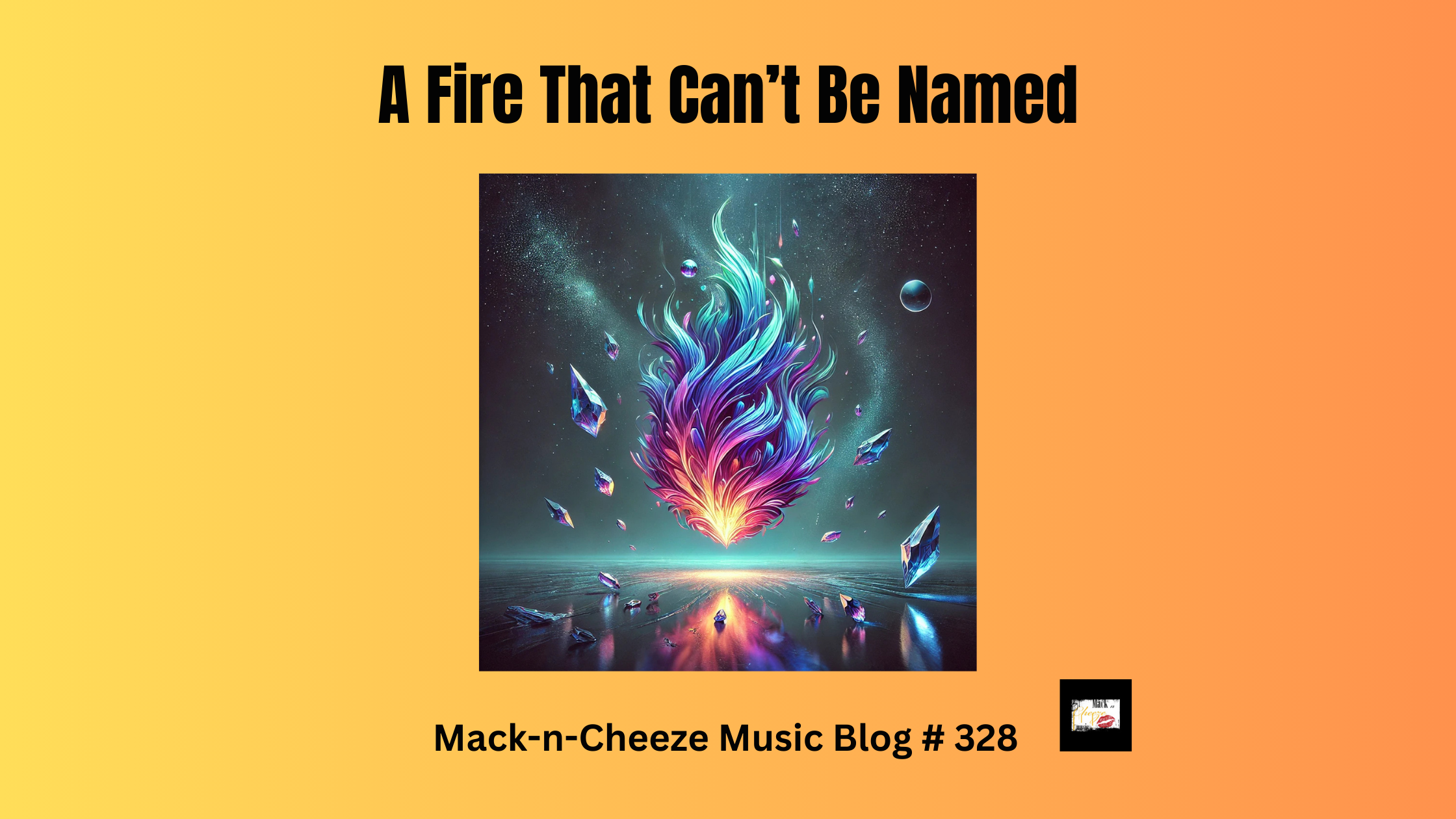
What we know often outruns what we can say – a fire that can’t be named. We feel the words, act on and live by them. We hear the echoes, but don’t know how to give them voice. The more powerful something is, the harder it is to name. Still, even if we can’t say what it is, we can edge closer by saying what it’s not. Sometimes, the only way to speak the truth we believe is sideways. Enter Art.
Estimated reading time: 9 minutes

Image generated by Dalle
Table Of Contents
This is my reality.
This moment is the battleground where real creative work is made or abandoned.
Not at the beginning when the fire is fresh, nor at the end when it is polished.
Right here.
When the energy feels like ash, and the work feels hollow, and you start wondering if you even cared in the first place.
Straight talk here:
When you notice the fire dimming, this means you were chasing something real.
Real things don’t die just because the first wave of energy fades. They wait because they are deeper down, under the surface.
This is where our hearts are buried in it.
The tendency is to intellectualize the big ideas, the metaphors, and the weight you carry for a creative idea, which floats in your subconscious. You can taste it but can’t actualize it. The fire was never about facts. More, it is that unnamable feeling you want to speak into existence.
Art As An Indirect Truth

Image generated by Dalle
Art doesn’t preach.
It points. Hints. Haunts.
Music doesn’t tell you what love is; it makes you feel its ache.
A painting doesn’t define sorrow but rather bleeds it into color.
What we know often outruns what we can say: a fire that can’t be named.
We feel the words, act, and live by them. But we cannot speak them because the truth outruns the tongue.
Have you found the more powerful something is, the harder it is to name?
Still, even if we can’t say what it is, we edge closer by saying what it’s not.
Sometimes, the only way to speak the truth we see is sideways.
The Philosopher’s Bent
Ludwig Wittgenstein pried open the limits of words.
In Tractatus Logico-Philosophicus, he argued that words could only capture facts. Anything deeper lives outside their reach.
Later, in Philosophical Investigations, he turned his thinking inside out, seeing language not as a mirror of reality but as a set of living “games” shaped by how we use them.
Wittgenstein saw reality divided into two worlds:
There is a world of facts where language works, such as, “The cat is on the mat.”
And the world beyond facts where language breaks down: ethics, aesthetics, and the mystical, where the most profound truths aren’t spoken.
Art As A Unique Mode Of Knowing
Art is not something we add to life after we understand it but is a way to understand life in the first place.
It reaches places reason can’t and carries meaning straight into the experience without translation.
Art steps in where facts break down and explanations fall short, showing what can’t be said and revealing what can’t be explaine
Art doesn’t need to point to the truth.
It is truth, lived through feeling and experience.
Louis Arnaud Reid reshaped the old idea that knowledge belonged only to logic and facts.
In A Study in Aesthetics (1931), he argued that feeling is not separate from knowing—feeling itself is a mode of knowledge.
Art, in Reid’s view, isn’t something added to life.
It is a direct way of apprehending reality, something reason alone can’t touch.
“A work of art is a mode of direct apprehension; it is not something added to knowledge, but a form of knowledge itself.”
(Reid, A Study in Aesthetics, 1931)
Art does not describe life.
It does not explain it.
It shows it through experience, through meaning felt directly.
To be clear:
“Art is itself a way of apprehending reality, a form in which meaning and value are directly felt.”
(Reid, A Study in Aesthetics, 1931)
When reason stutters and language fails, art steps forward, carrying truths too deep to be spoken.
The Limits Of Language

Image generated by Dalle
“Art is the creation of forms symbolic of human feeling.” Susanne Langer
Art speaks without words. It moves in a different language, composed of forms, rhythms, and feelings.
Music, painting, sculpture, and dance are not explanations of life. They carry the weight of our existence, catching the shape of something too exotic for mere interpretations.
Susanne Langer called these acts “presentational symbols.” They don’t stand in for words., but rather show meaning the way a storm shows anger or a sunrise shows hope, without needing to say anything.
The feeling does not have to evoke chaos. Emotions are not necessarily noise. They are structured, alive, and expressible but must be shown, not told.
In Langer’s view, art doesn’t illustrate reality. Art unfolds as a reality and is felt through the hands, the ears, and the heart.
Where language breaks down, art steps in, speaking the truth without ever saying a word.
Do You Recognize The Fire

Image generated by Dalle
Susanne Langer’s philosophy hits me hard because it tells the truth I’ve lived.
For ten years, I put music down and walked away from the thing that felt most alive in me. I did it out of obligation to my father, out of duty, and pressure to do what was expected.
I spent those years chasing the conventional life, trying to build an alternate career, attempting to remarry, and trying to start a family.
None of it landed. No matter how much effort I poured in, those doors stayed shut.
And in the middle of all that trying, I was frustrated, not because life wasn’t cooperating, but because I had buried the part of me that knew how to speak without words.
Music was my language, and I silenced it. The fire I could not name.
I traded something real for something “acceptable,” and all I got was a deep ache I couldn’t explain. Sometimes, crawling on the floor in a torrent of tears because of the empty I could not identify.
That’s why this matters to me, this idea that art doesn’t have to explain anything.
It doesn’t need permission or translation.
And neither do I.
What I create now doesn’t come from comfort.
It comes from that silent decade, from the pressure, the failed checkboxes, and the fire that kept burning even when I tried to smother it.
Art steps in where language dies. That’s where I live now, where I create from.
Not to impress. Not to explain. But because I have to. And finally, being able to say it in the only way I ever could.
When Meaning Slips Away
He was born in 1978 in Düsseldorf, Germany, and is closely associated with the Düsseldorf School of Photography and Conceptual Art. Although many of his exhibitions have taken place throughout Europe, his roots and core practice remain in Germany.
Staack doesn’t try to fix the breakdown. He invites you to stand inside it. His art is not built to deliver meaning. He shows where meaning slips, the places it fades, distorts, and disappears in real-time.
Peter Friese says Staack’s work digs into one core question: what even counts as an image anymore, and can it still tell the truth in a world overloaded with media?
Journalist Helga Meister says Staack’s work reveals the limits of visual art – pushing against how far images can go in representing reality.
In his Silent Messages series, a photo dissolves until there’s almost nothing left. A sound plays, but you’re not sure if you actually heard it.
Words flicker as codes you’ll never break. You’re left with the weight of something real but can’t hold, name, or explain.
Staack isn’t trying to rescue communication.
He’s standing in its collapse.
Where Reid argued that feeling is knowledge, and Langer gave form to feeling through symbol, Staack shows you the fallout when meaning falls apart, when even form disintegrates.
This isn’t a theory.
It is the lived space between expression and silence.
What’s left isn’t a conclusion but a presence.
But the fire that can’t be named still burns.
What Is Left After The Words?
There are no conclusions here. Only the work remains. The flame keeps rising.
The truth I’ve been chasing can’t be explained. It doesn’t sit inside a lens and often makes no sense. Clarity and vision are not always part of the process. Faith in my craft can come in flashes and, oh yeah, in rhythm.
It comes when I stop trying to say the thing and start making it real.
Maybe that’s the point, that art doesn’t close the loop but keeps the refrain alive.
That’s where I am rooted, deep in the ache and the form, listening to the silence and the sound.
Still creating and burning. Showing up, declaring what I can’t name.
Can We Help You?
What’s one truth you’ve learned that you wish you knew 5 years ago?

Thanks for reading. It is so appreciated.
If this post sparked something in you, pass it on.
Please share it with someone who does not know how to name their fire.
Leave a comment. I’d love to hear what fires you up.
And if you want more like this, hit subscribe.
Let’s keep pushing through.
Want More Mack-n-Cheeze?
Videos - Bryan At Mackncheeze on YouTube
Podcasts – Bryan At Mackncheeze Apple Podcasts, Fountain, Spotify
Leave a Reply